

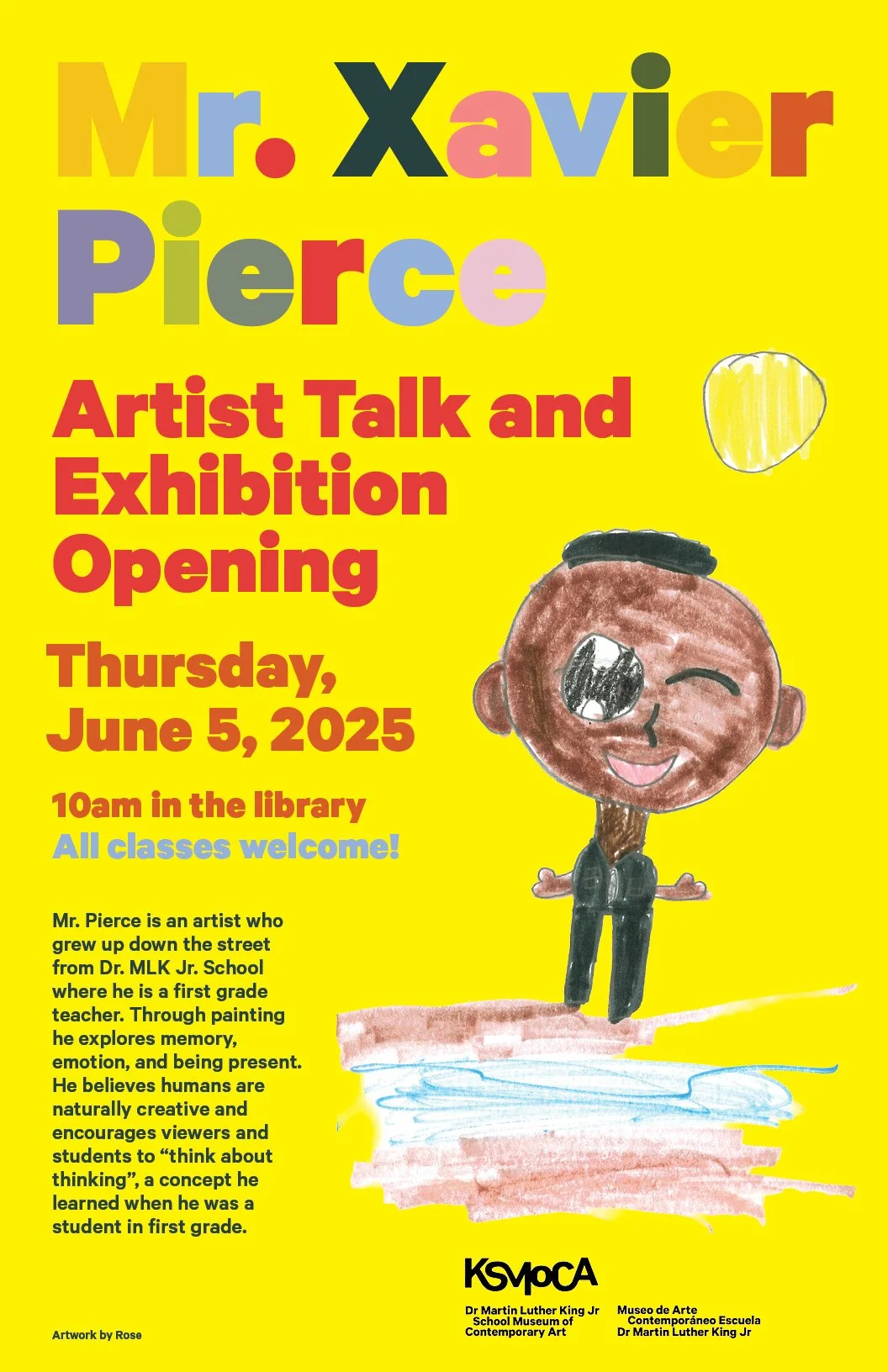
Poster with artwork by Rose. Poster design by Rodeo Studio at Portland State University
Making Room: Mr. Xavier Pierce with His First Grade Class
June 5 – November 20, 2025
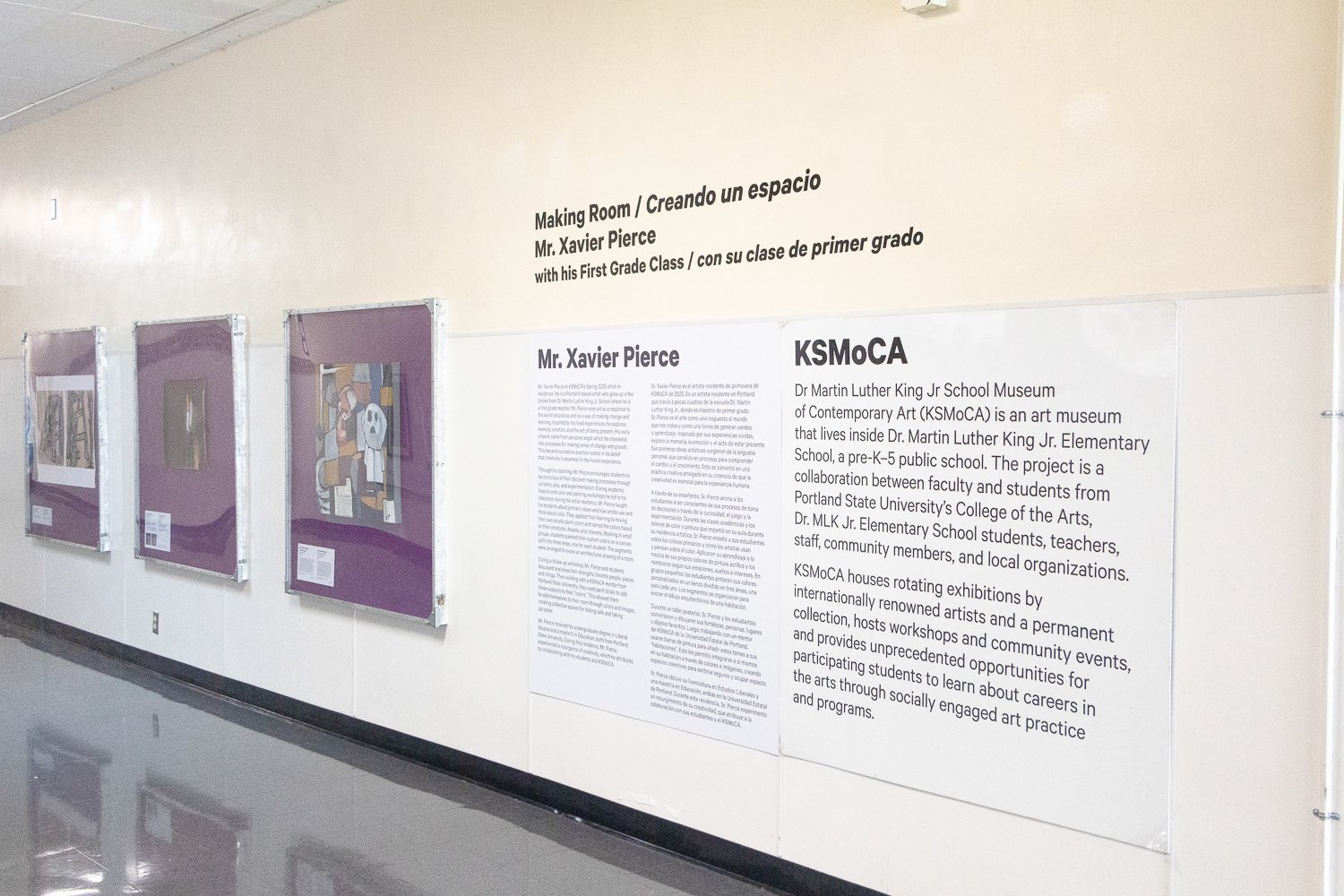
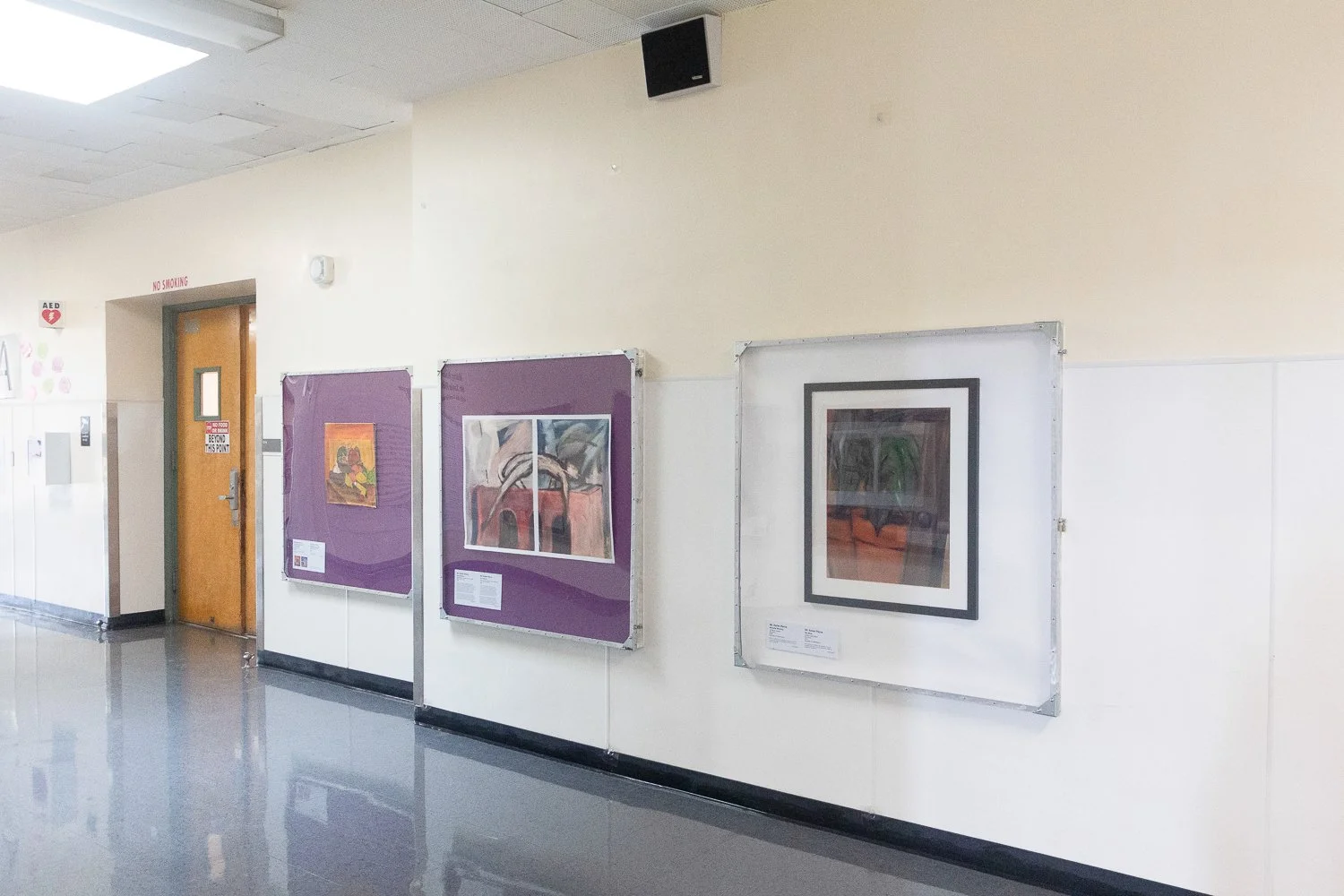
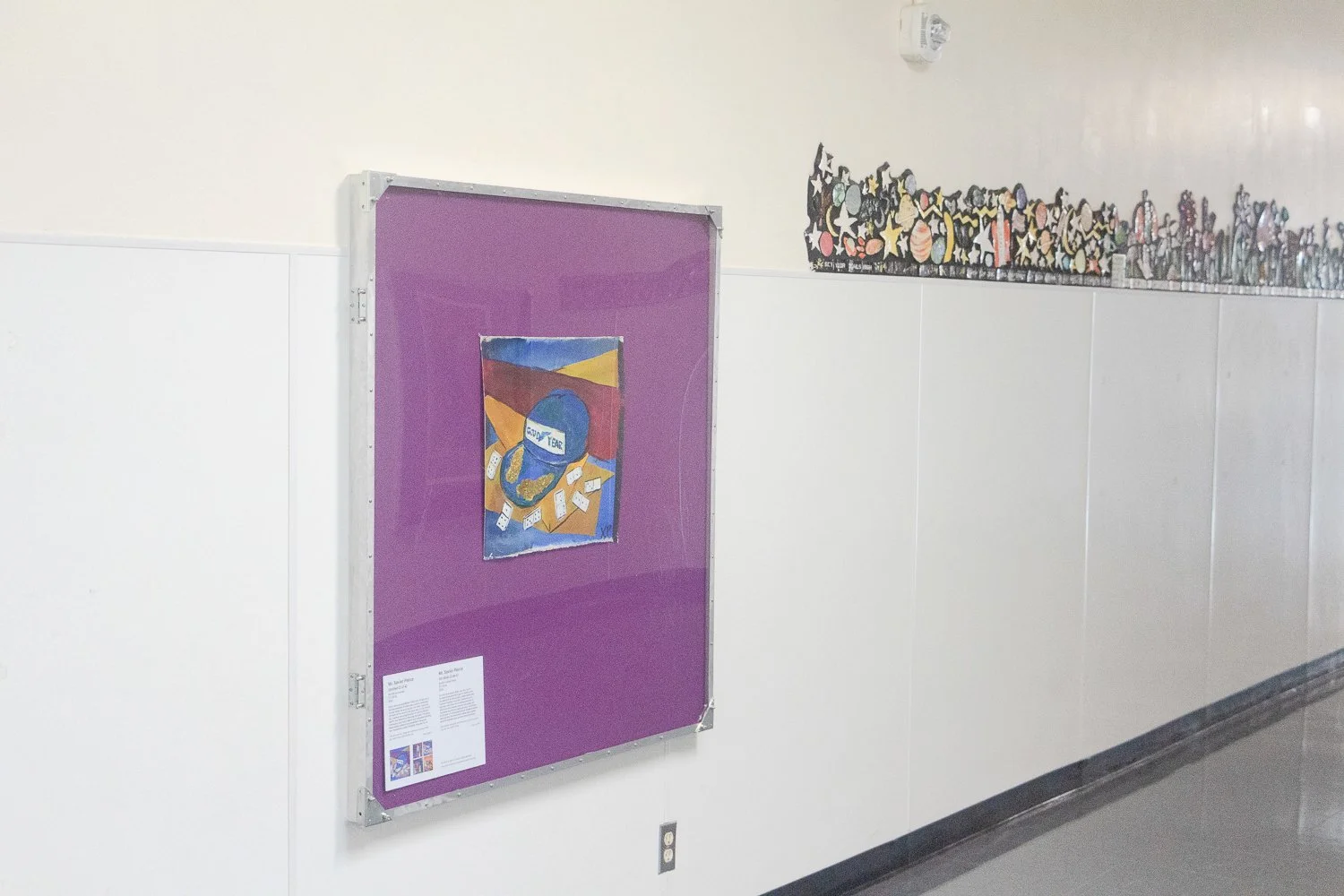
Mr. Xavier Pierce was KSMoCA’s Spring 2025 artist-in-residence. Mr. Pierce is a Portland-based artist who grew up just a few blocks from Dr. MLK Jr. School, where he teaches first grade.
He thinks of art as a response to the world around us and as a tool for making change and learning. Inspired by his lived experiences, he explores memory, emotion, and the act of being present. Through his teaching, he encourages students to reflect on their decision-making through curiosity, play, and experimentation.
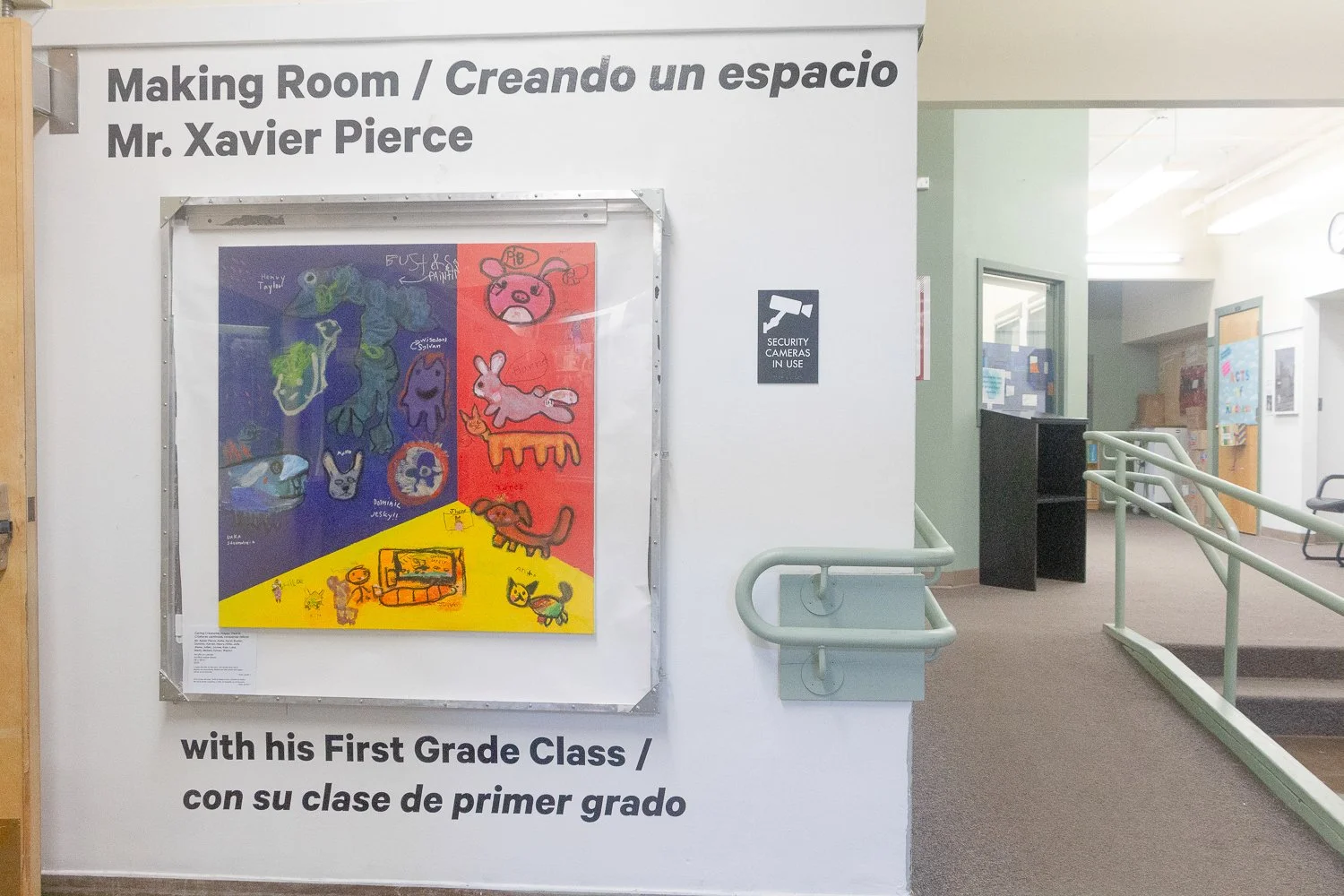
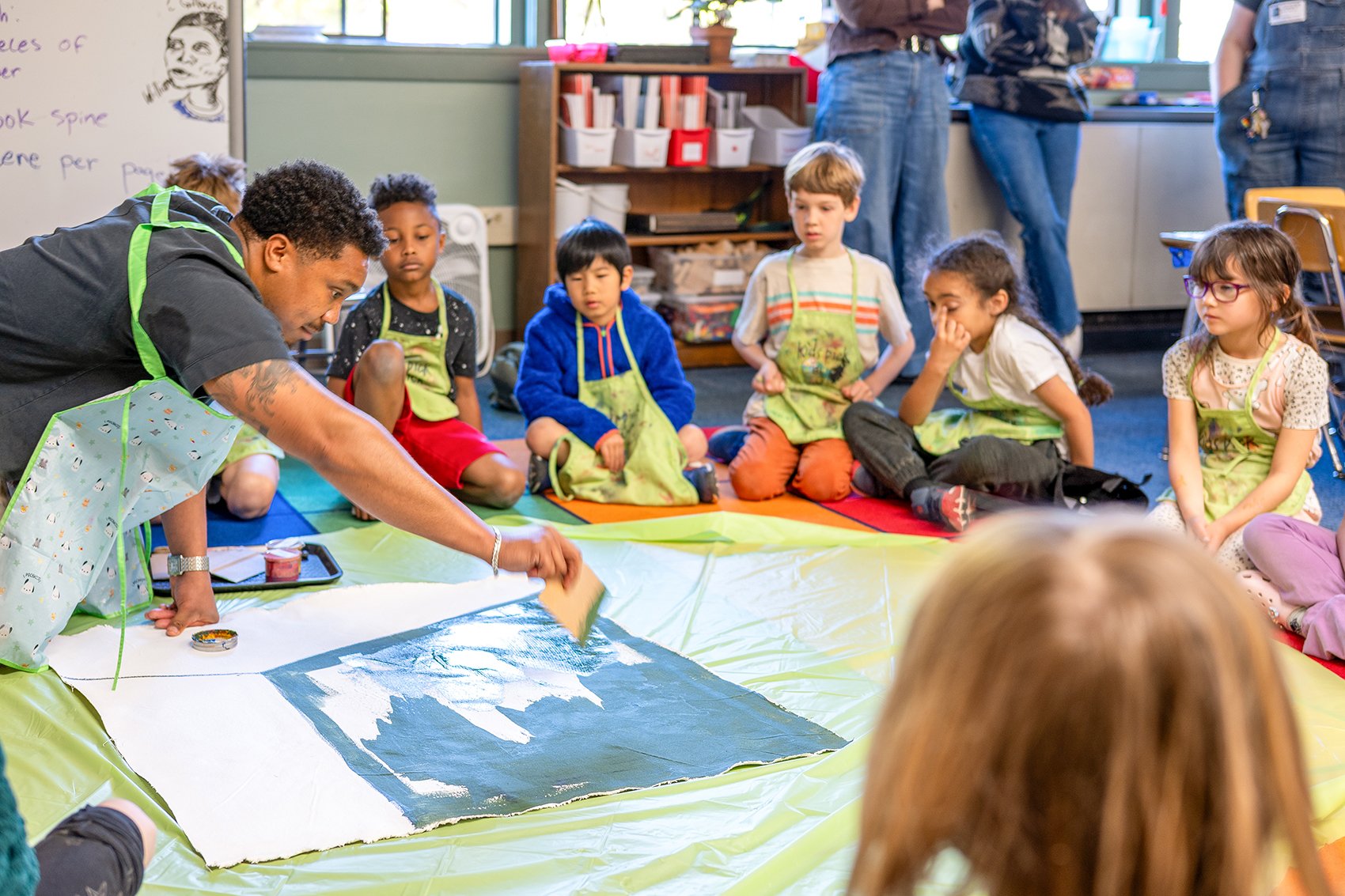
During his residency, Mr. Pierce led conceptual painting workshops that invited students to learn and explore color, emotion, and identity. Students mixed their own paint colors, naming them based on their feelings, dreams, and interests. In small groups, students painted their colors on shared canvases designed to resemble rooms. During a follow up workshop, Mr. Pierce and students discussed and drew their strengths, favorite people, places, and things. With guidance from KSMoCA mentors from Portland State University, they added these subjects to their “rooms” using paint sticks, creating collaborative works exploring themes of identity, safety, and belonging.
Mr. Pierce describes his residency experience as a creative renewal, sparked by working alongside his students and the KSMoCA community. He holds a bachelor’s degree in Liberal Studies and a master’s in Education, both from Portland State University.
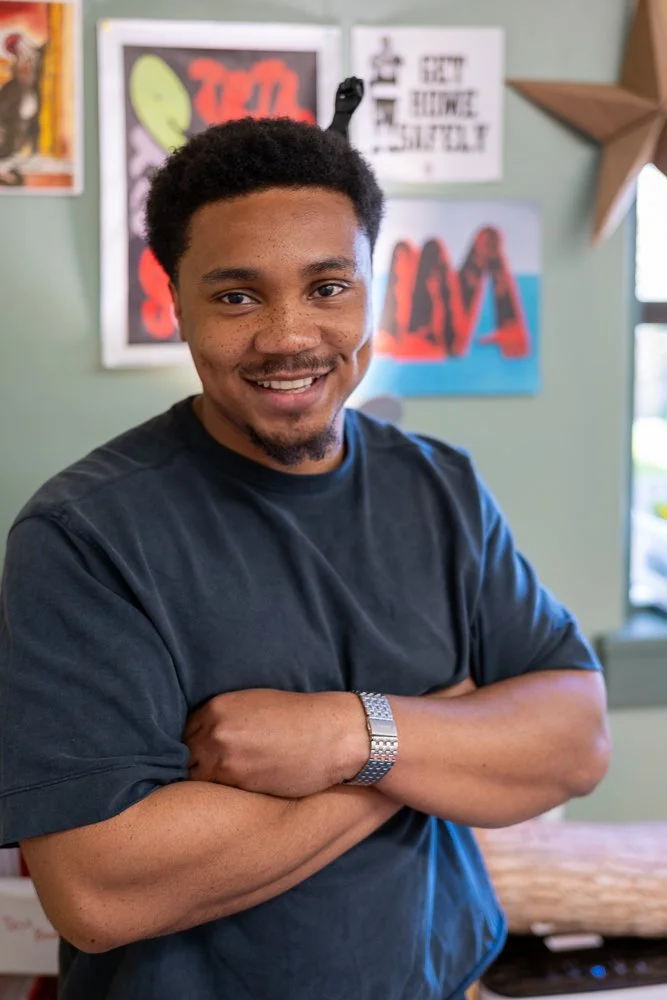
Xavier Pierce, Spring 2025 KSMoCA Visiting Artist
Workshops with Xavier Pierce
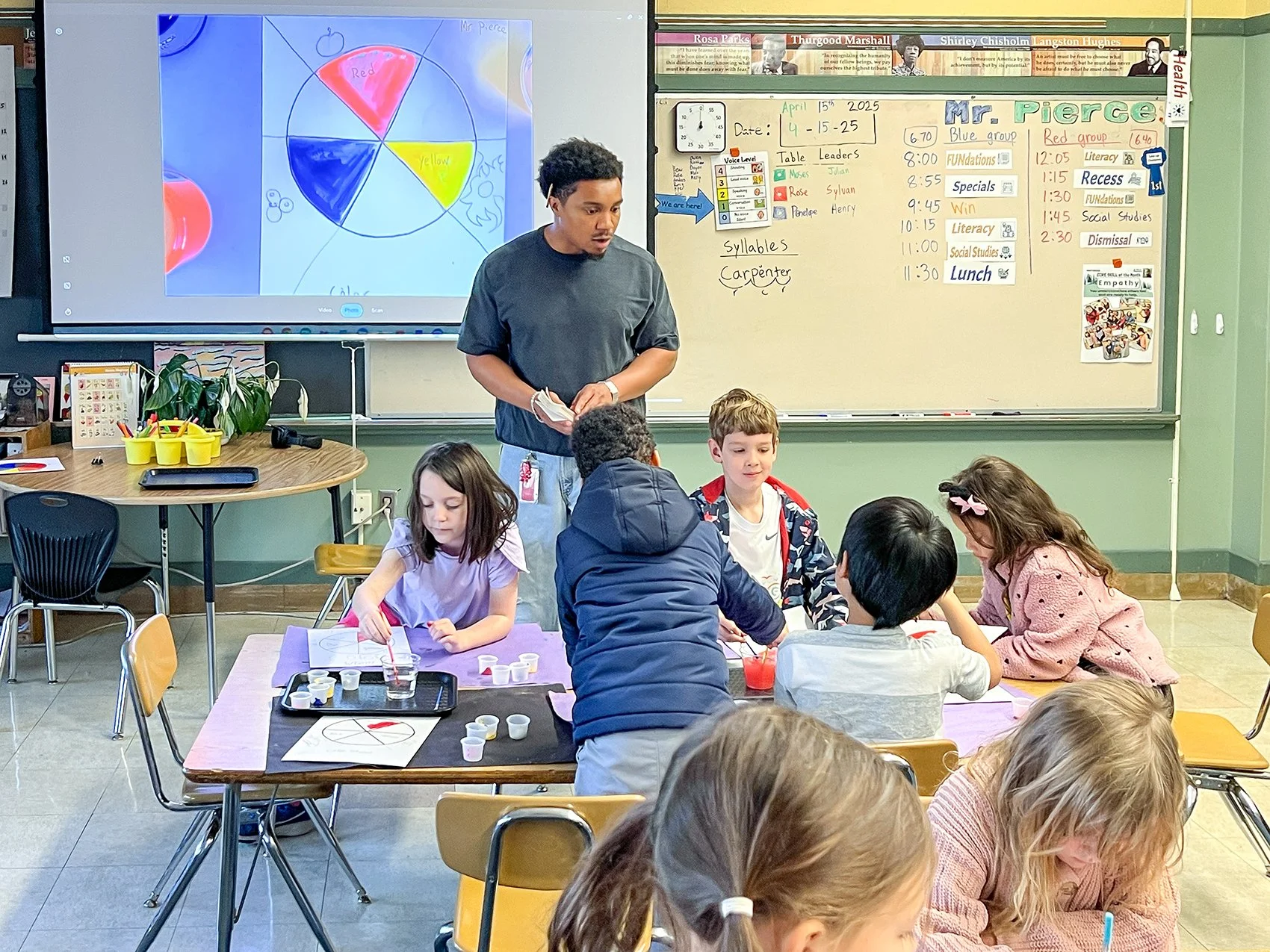
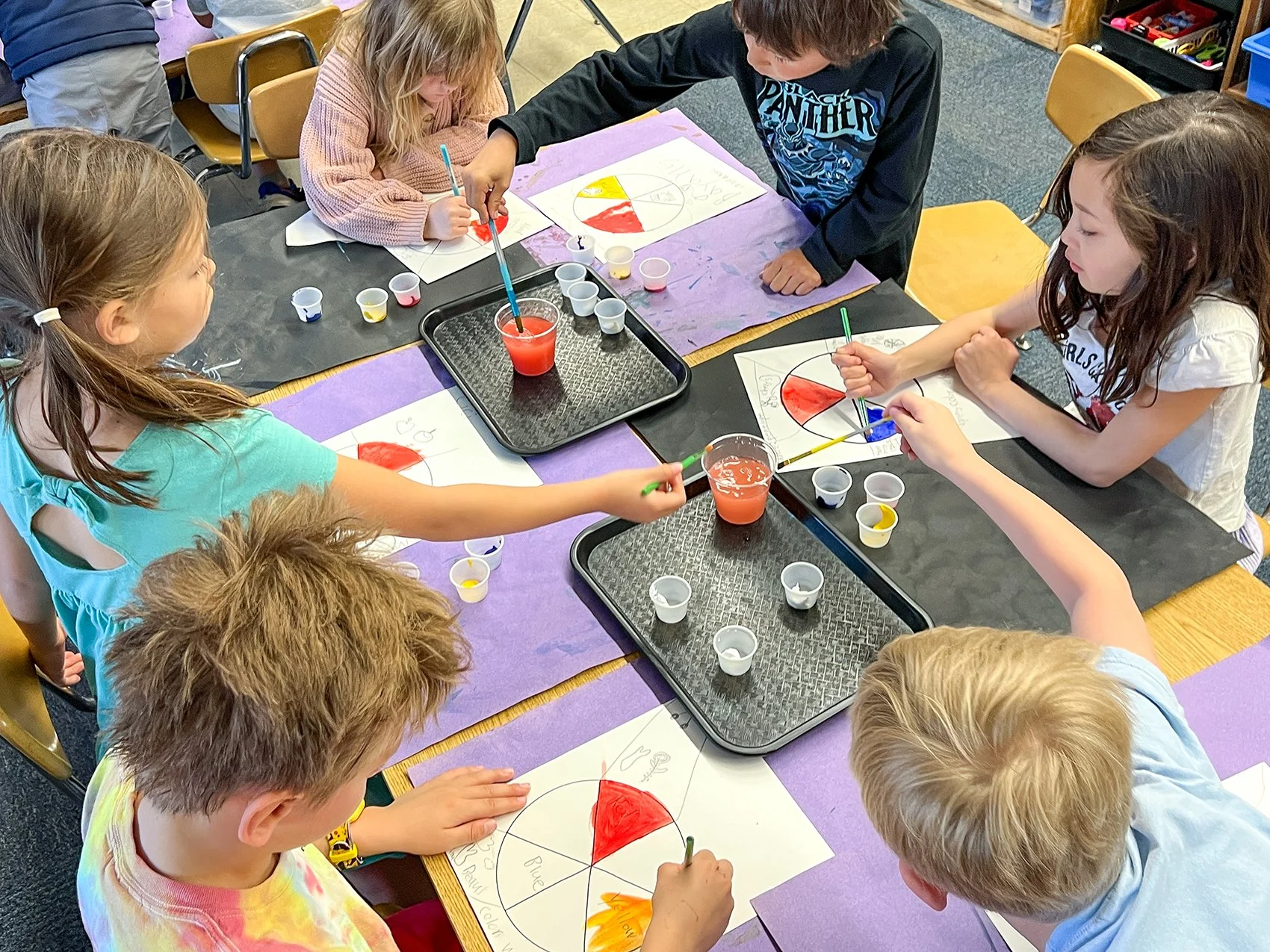
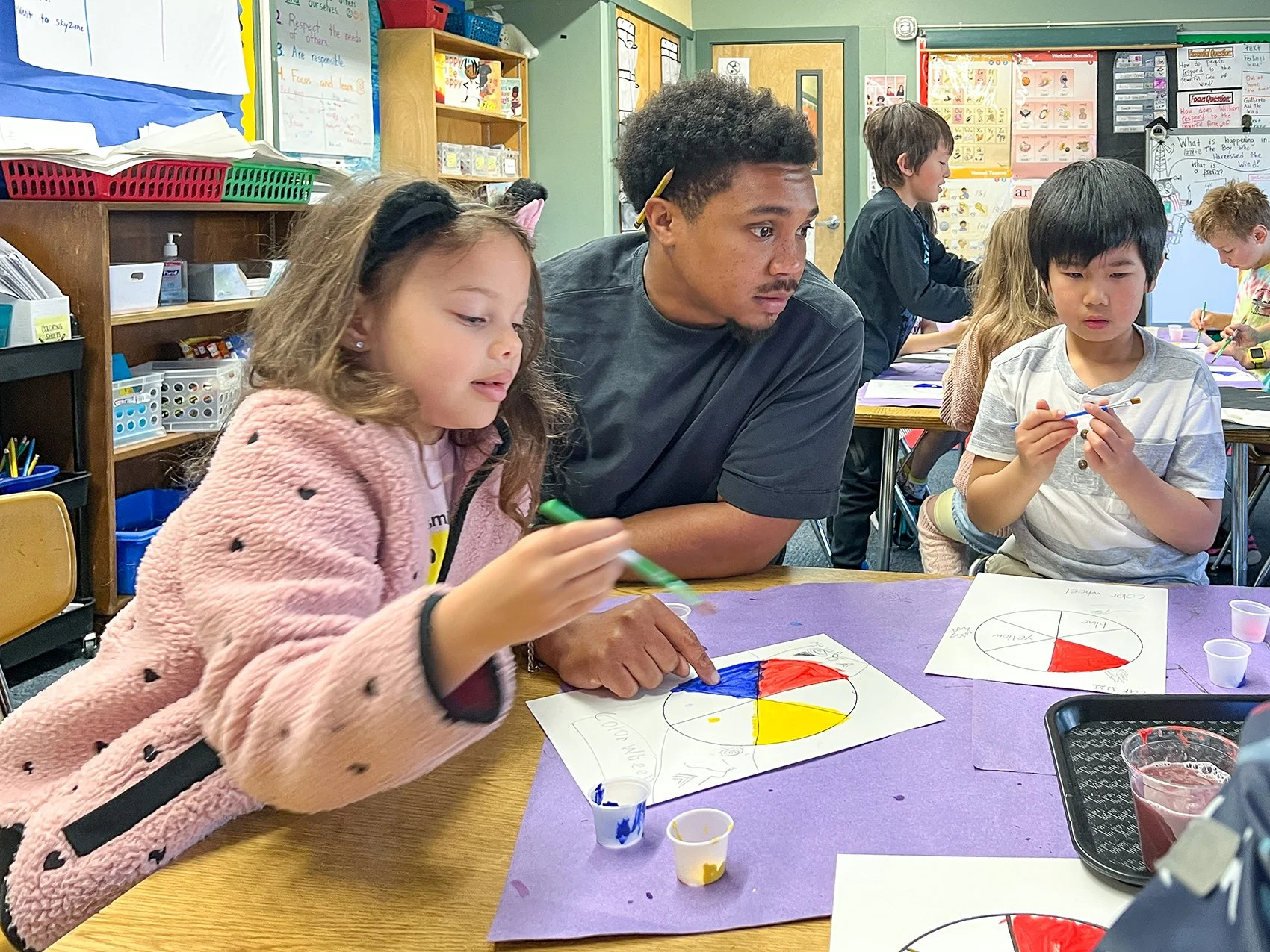
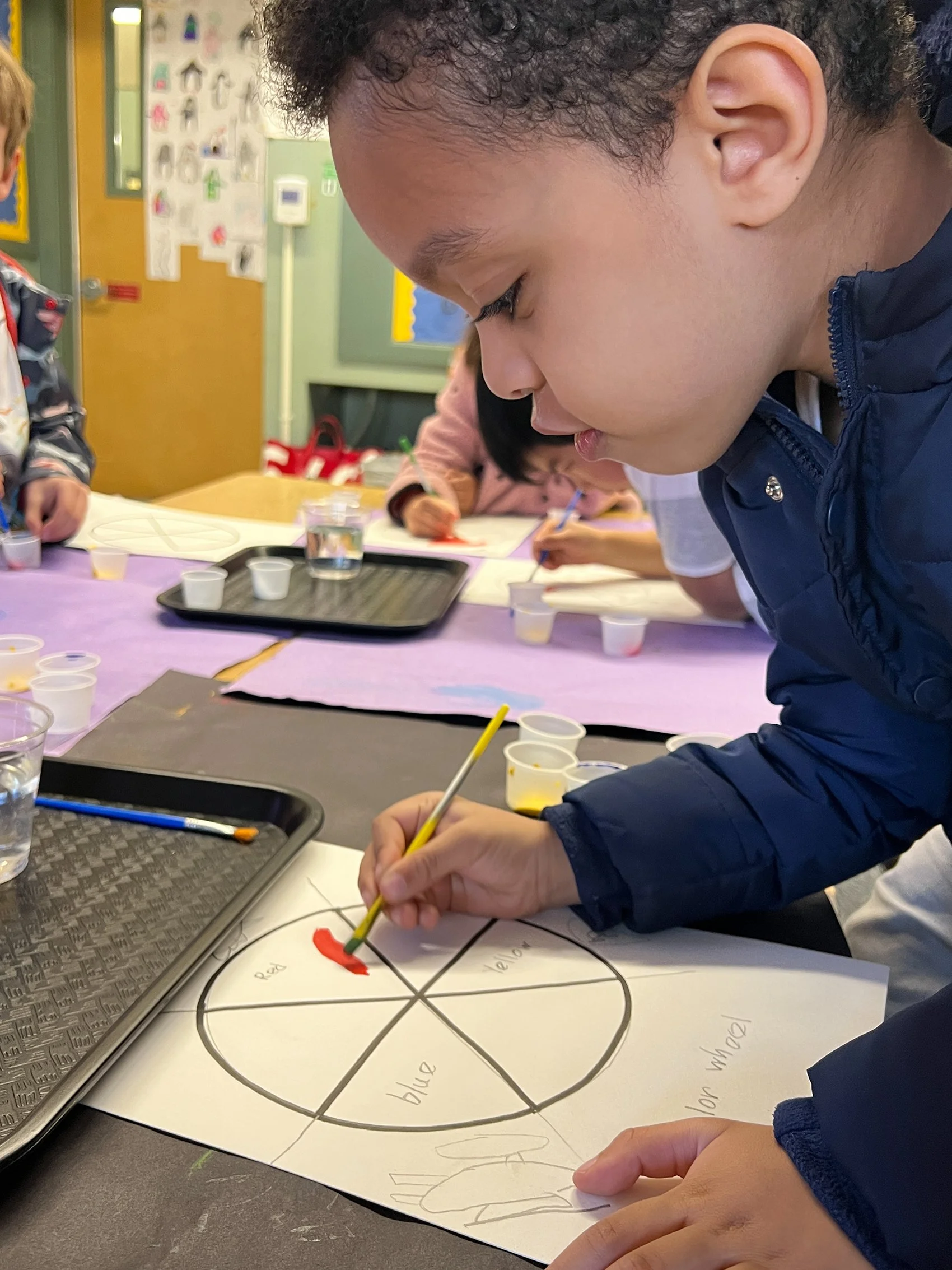
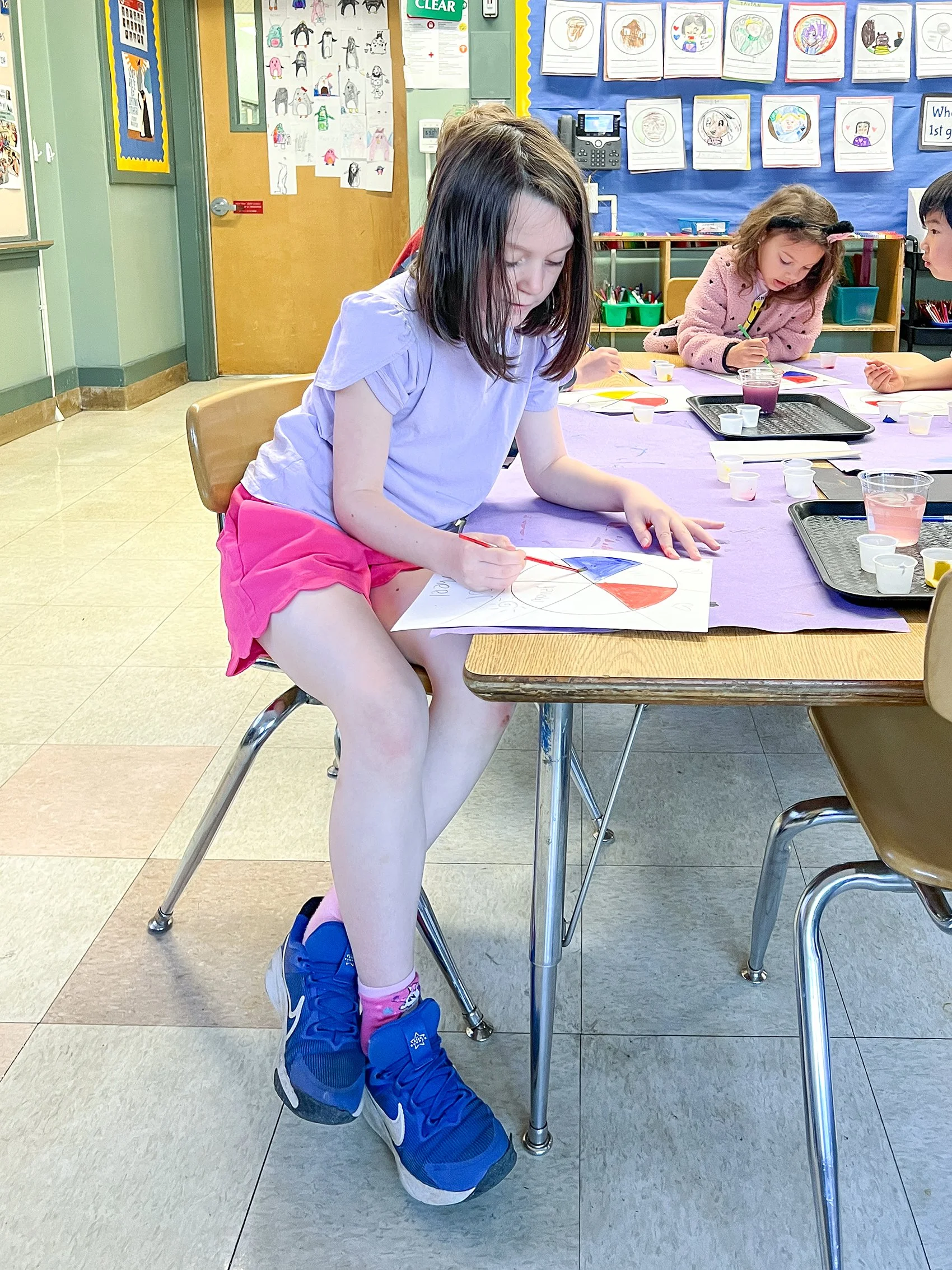
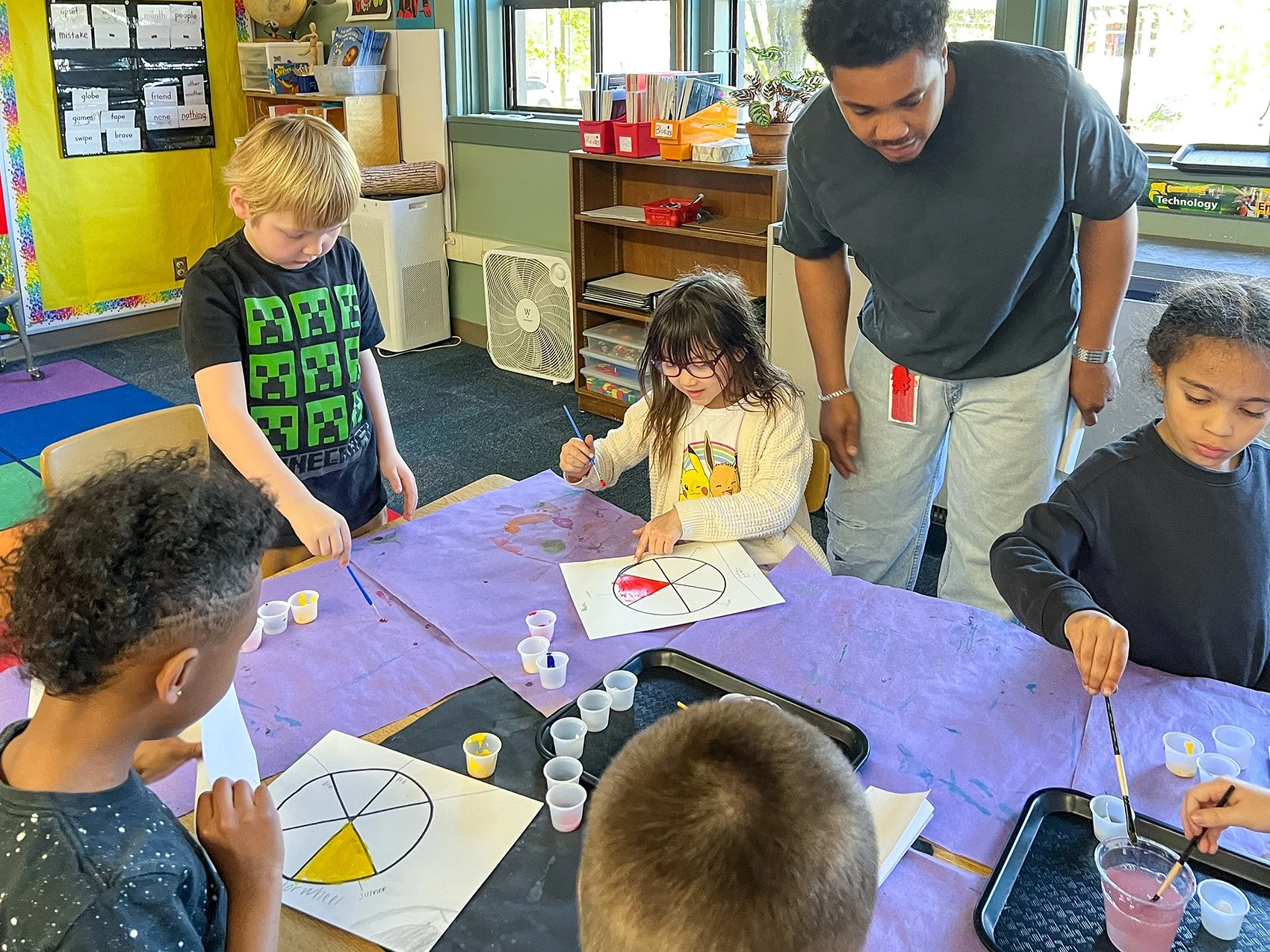
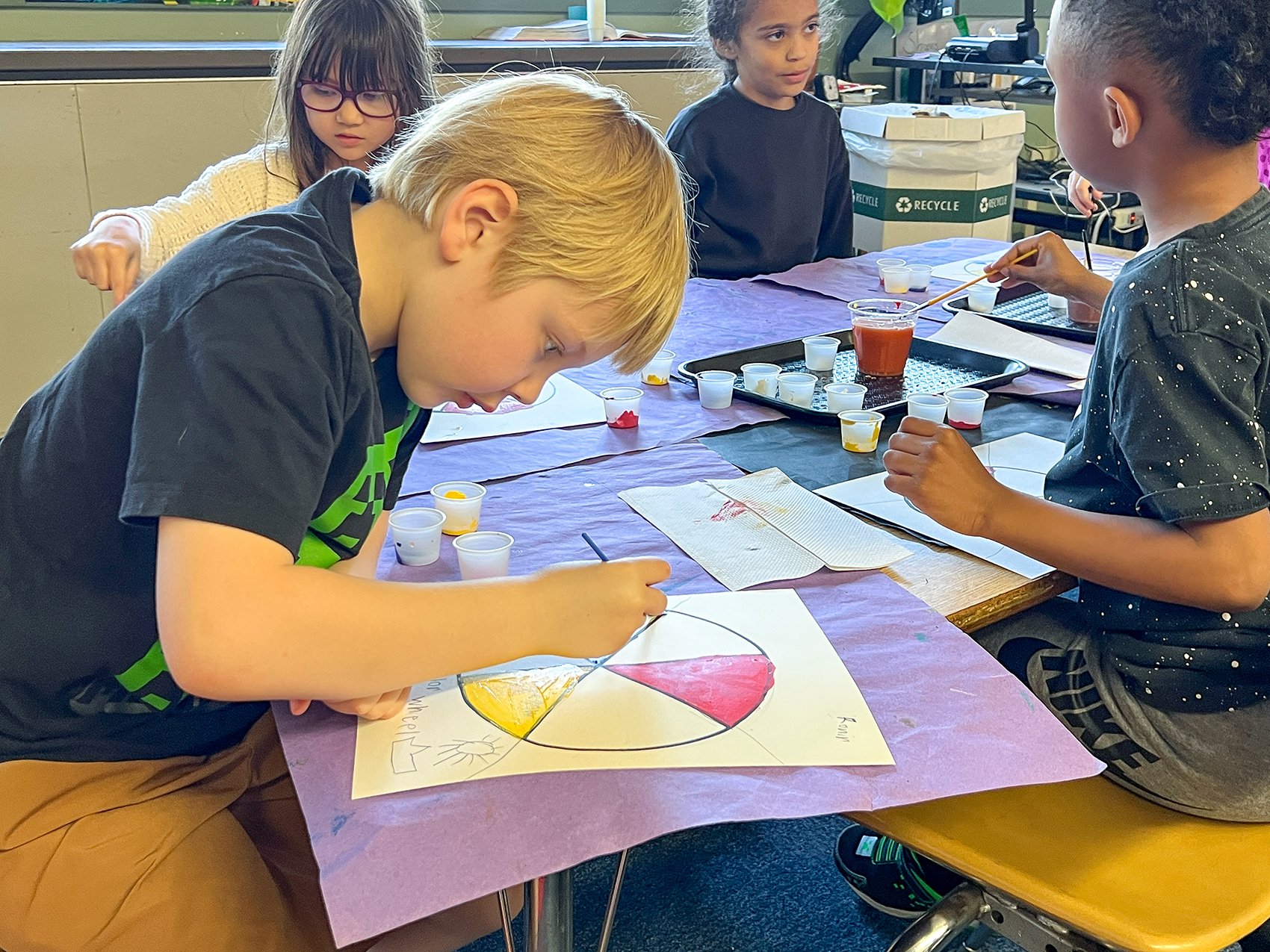
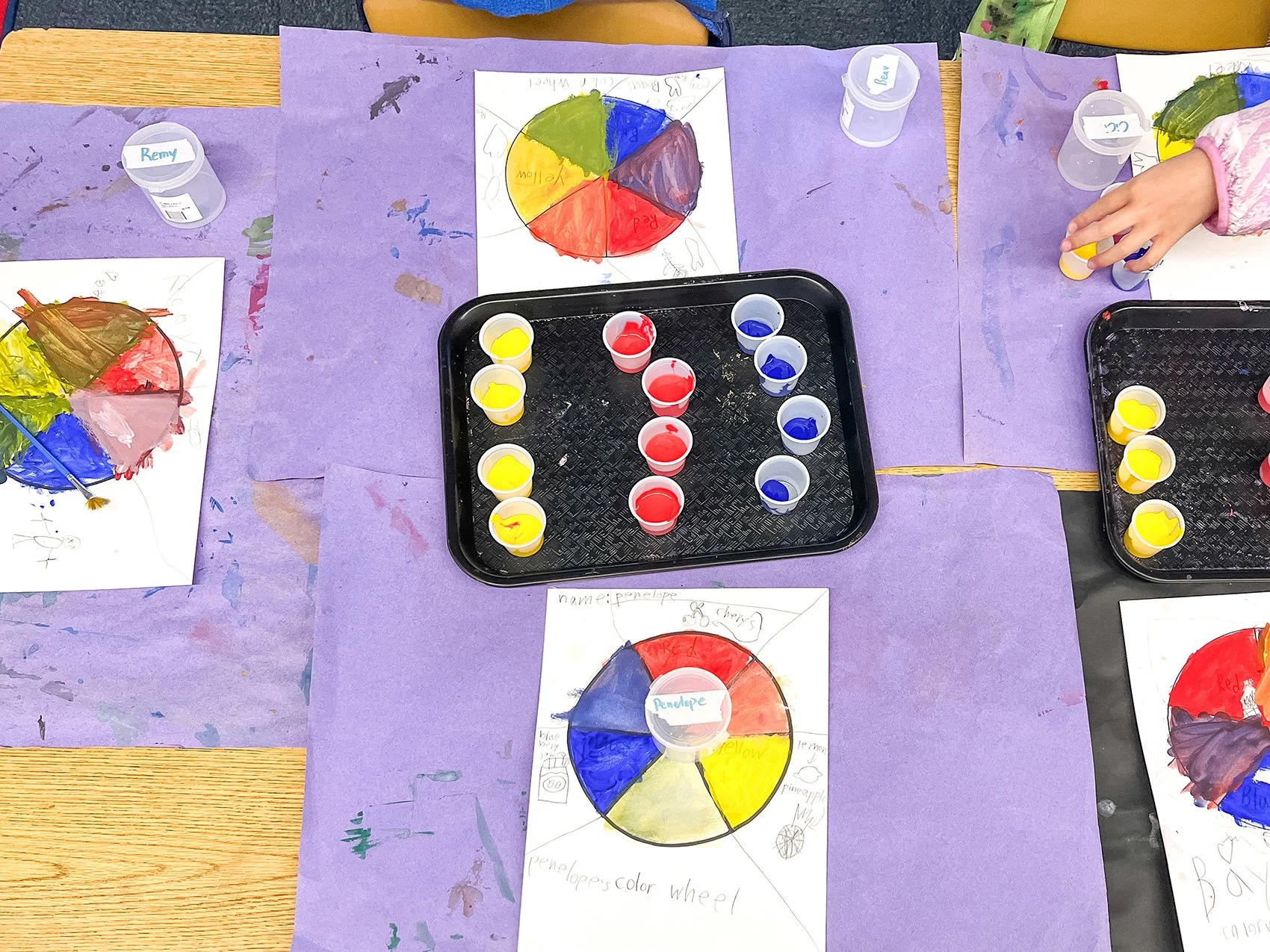
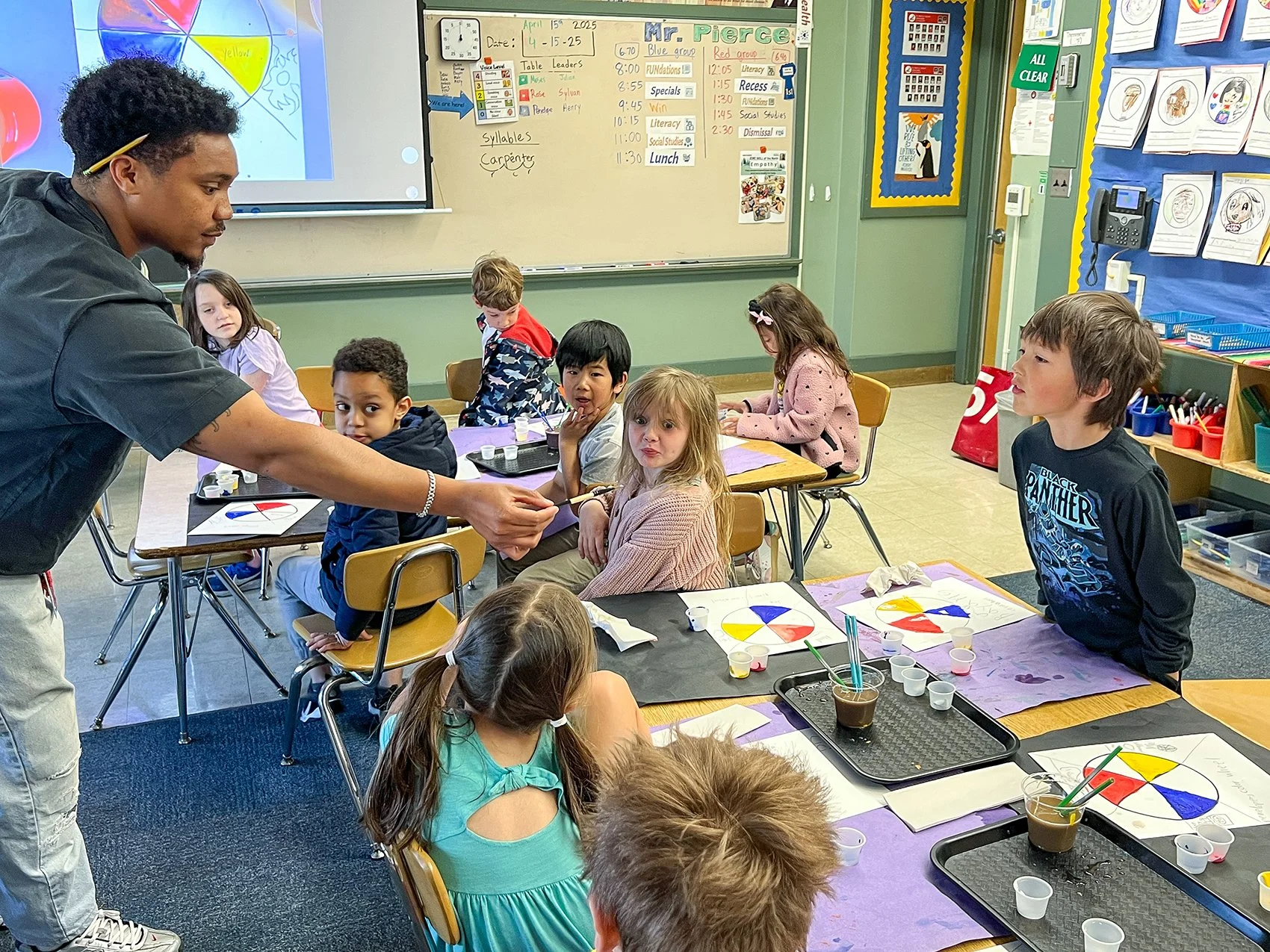
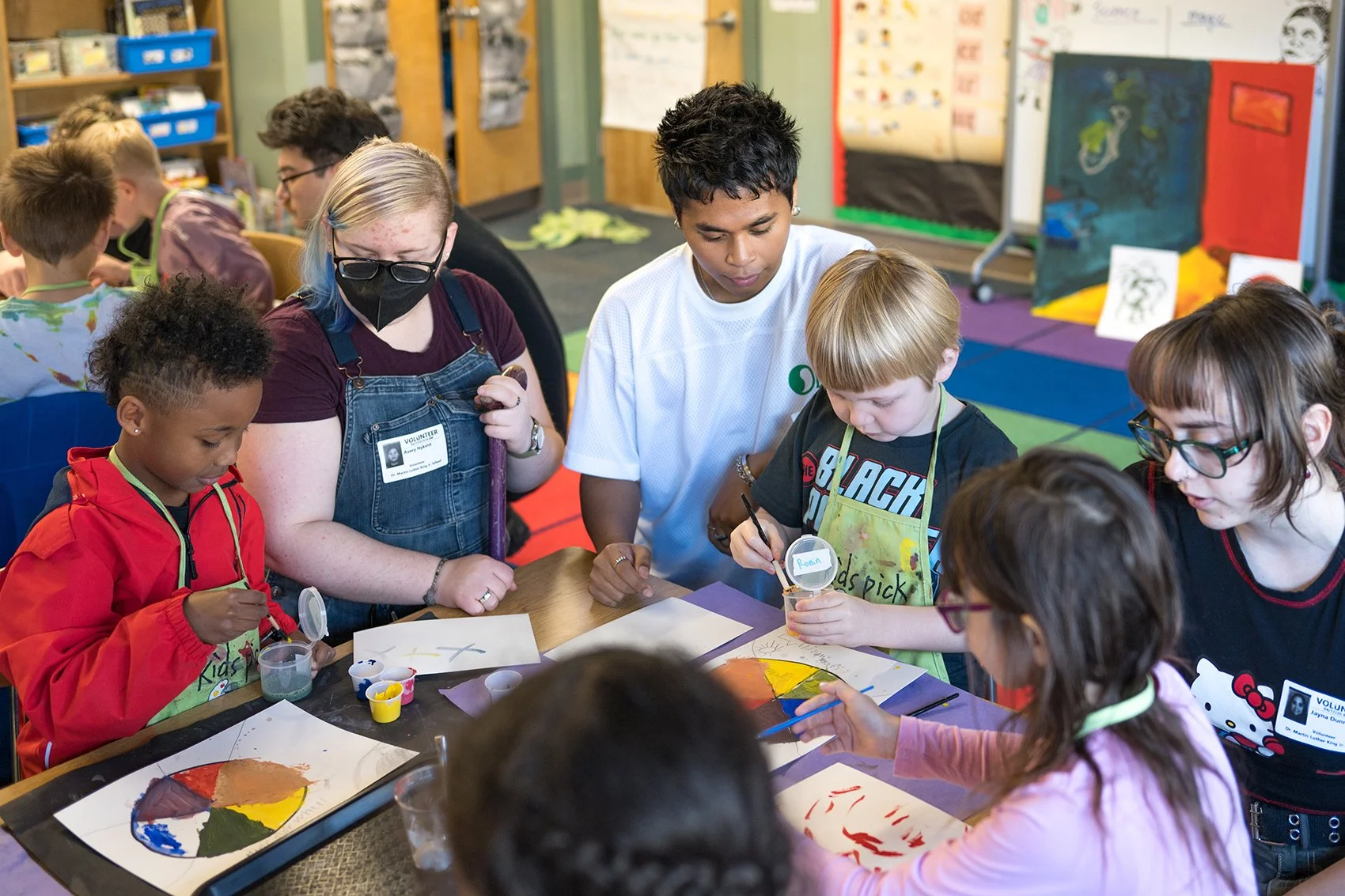
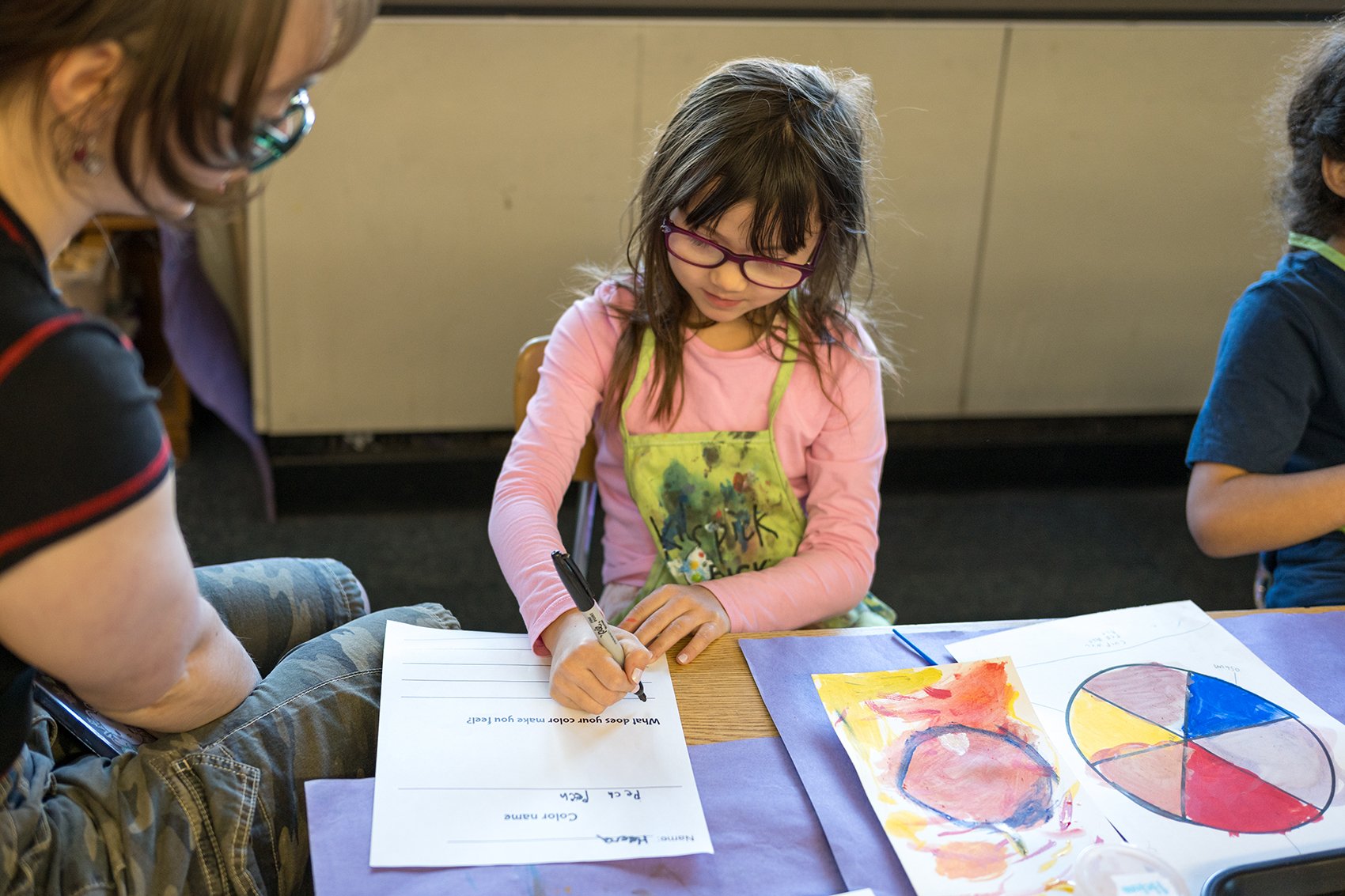
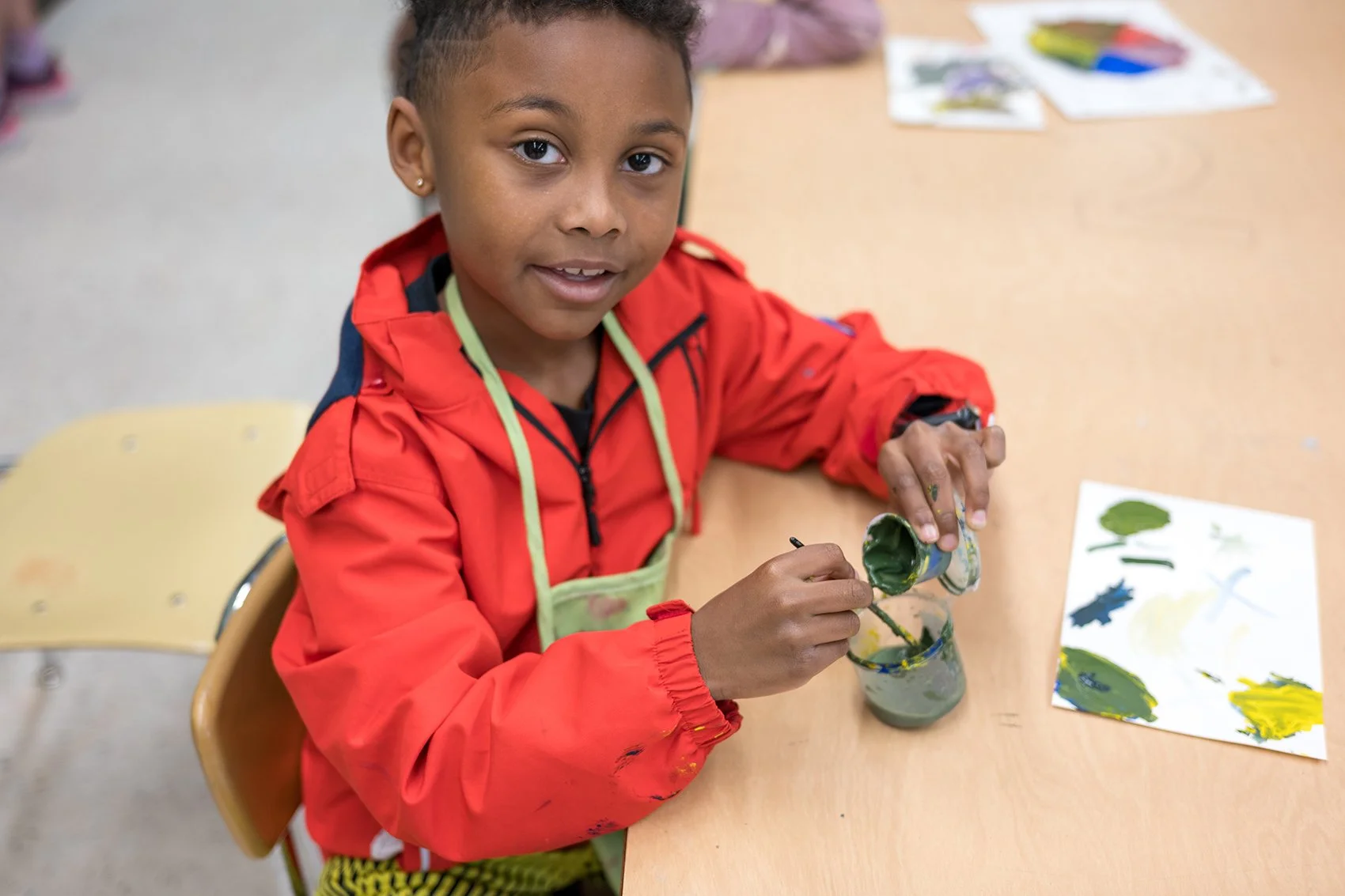
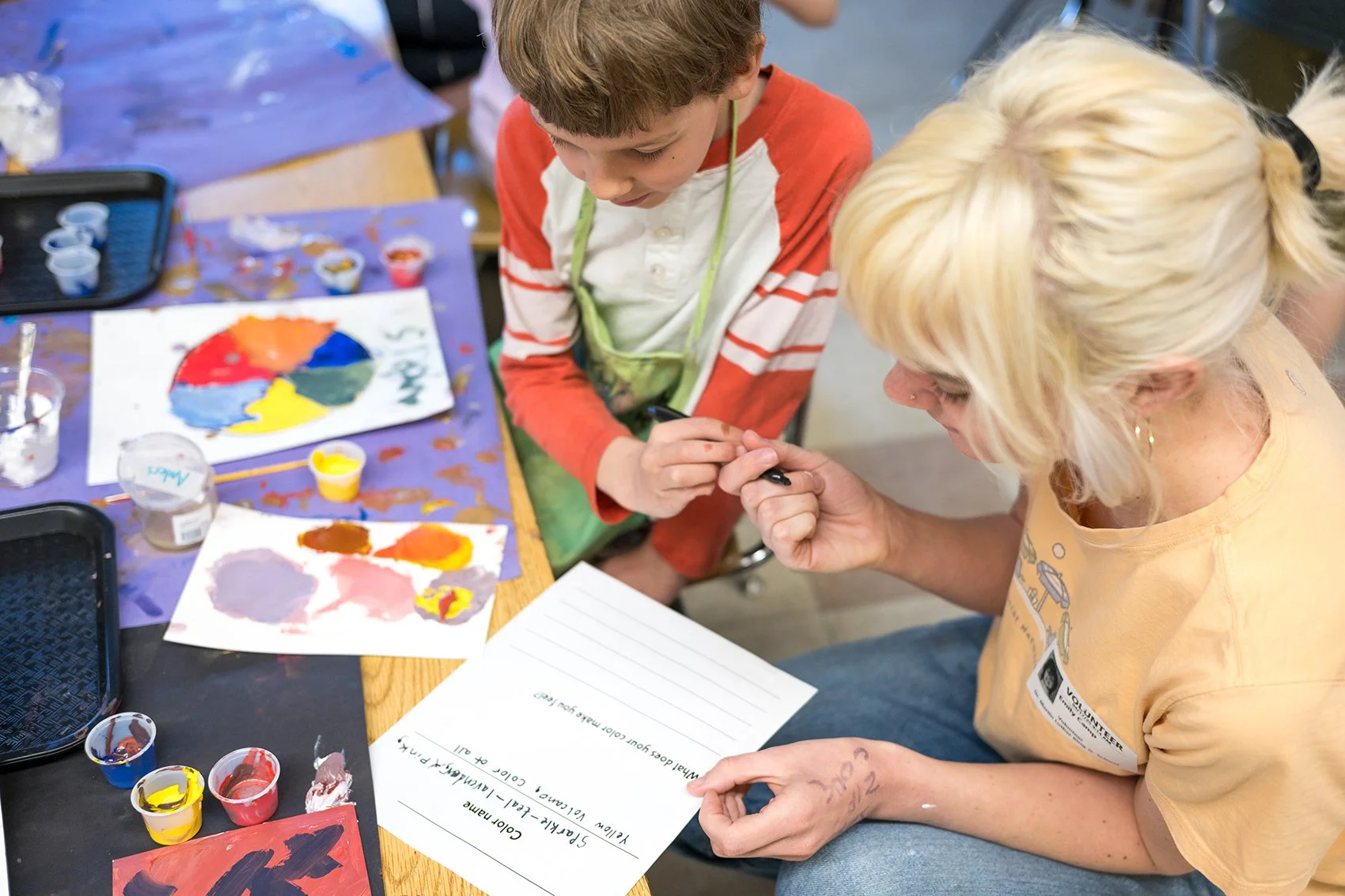
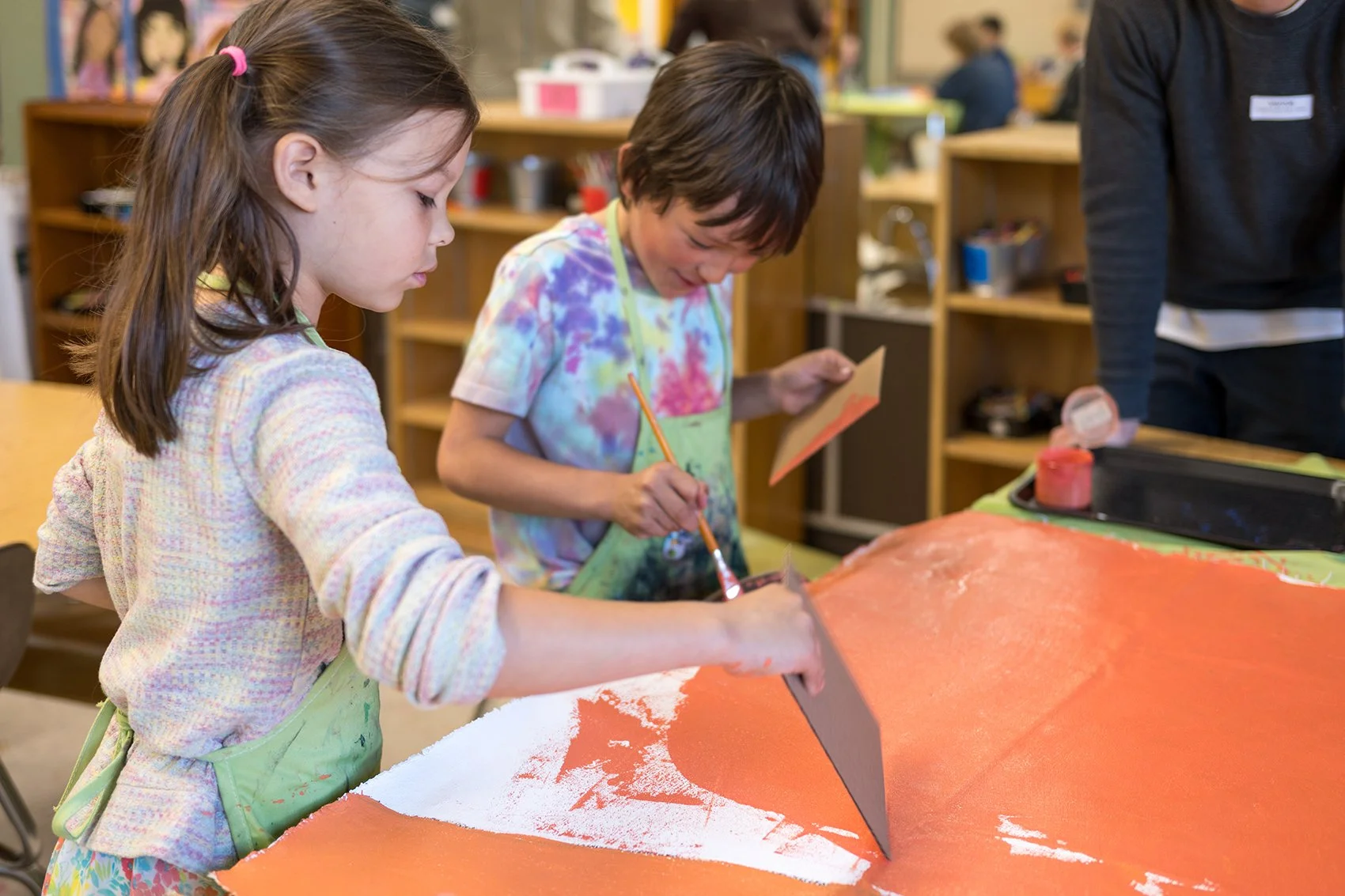
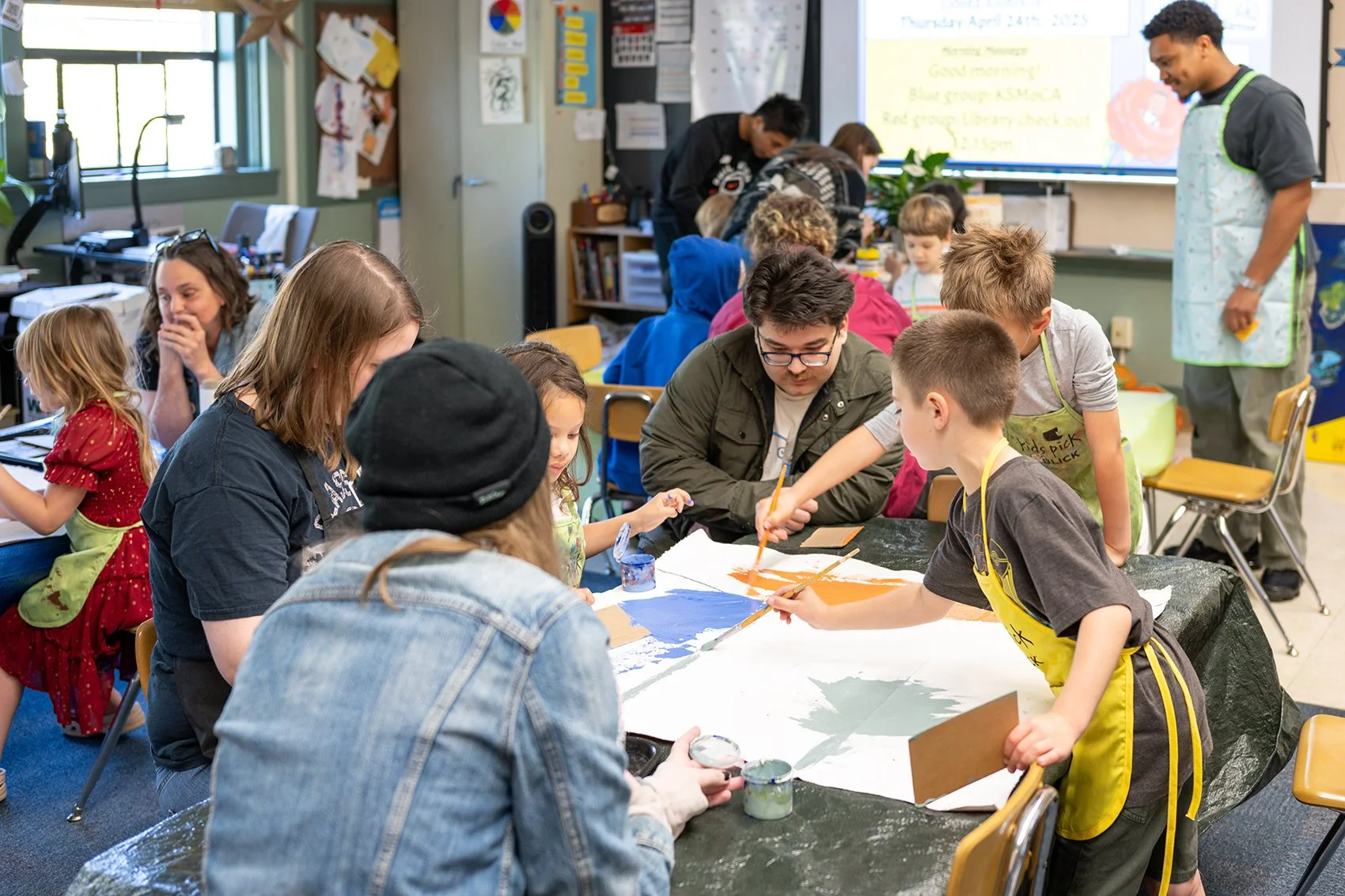
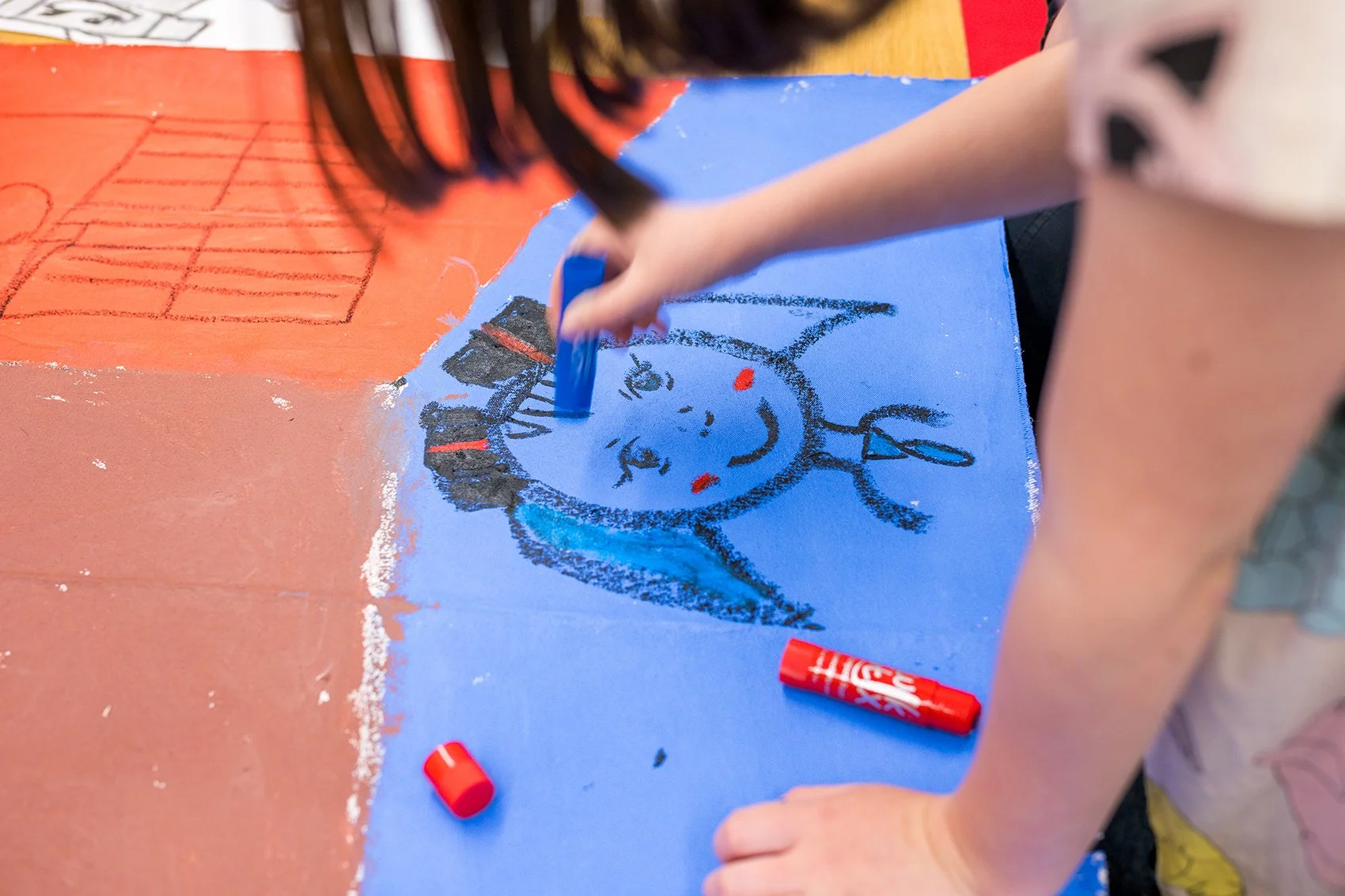
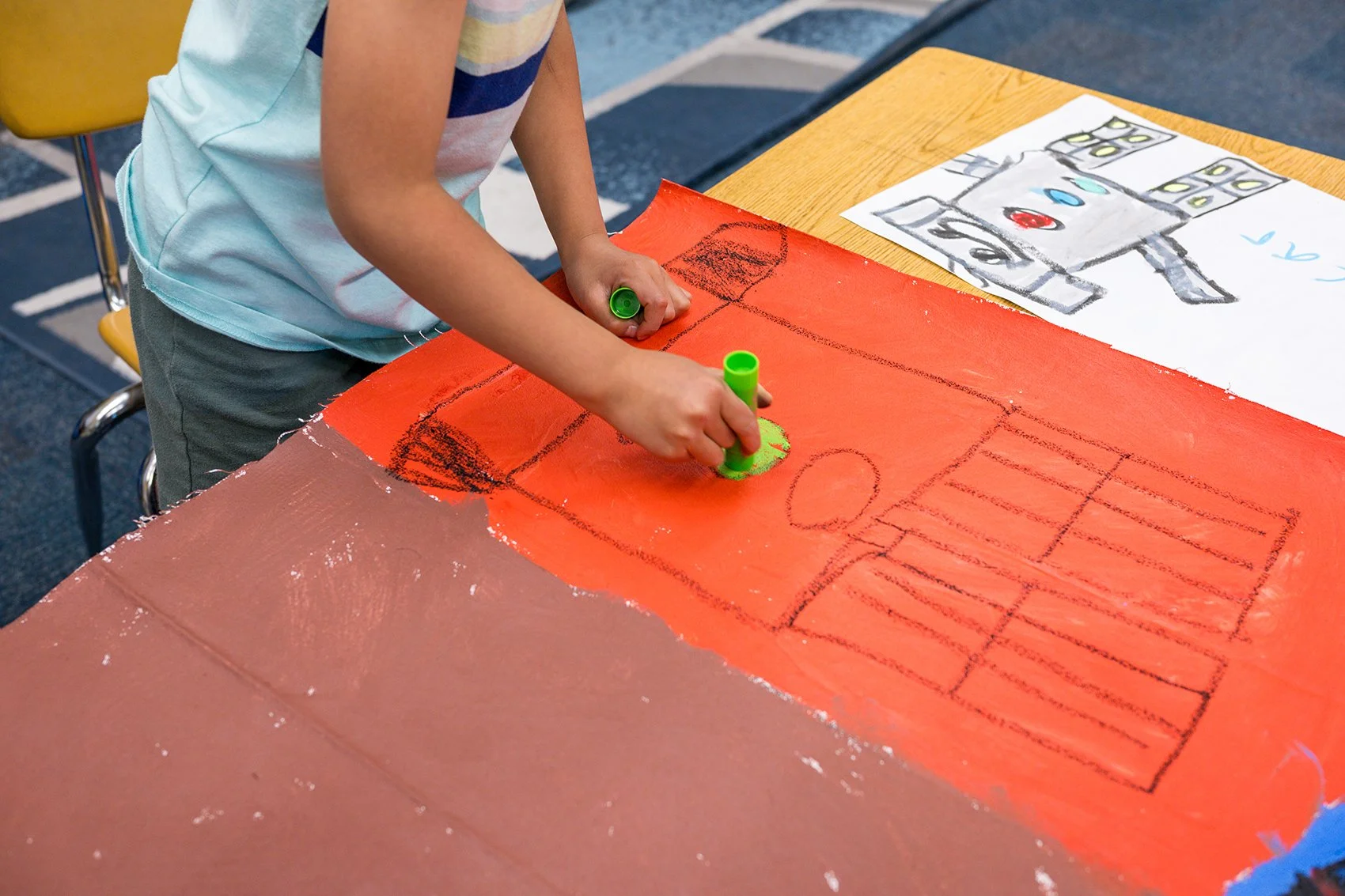
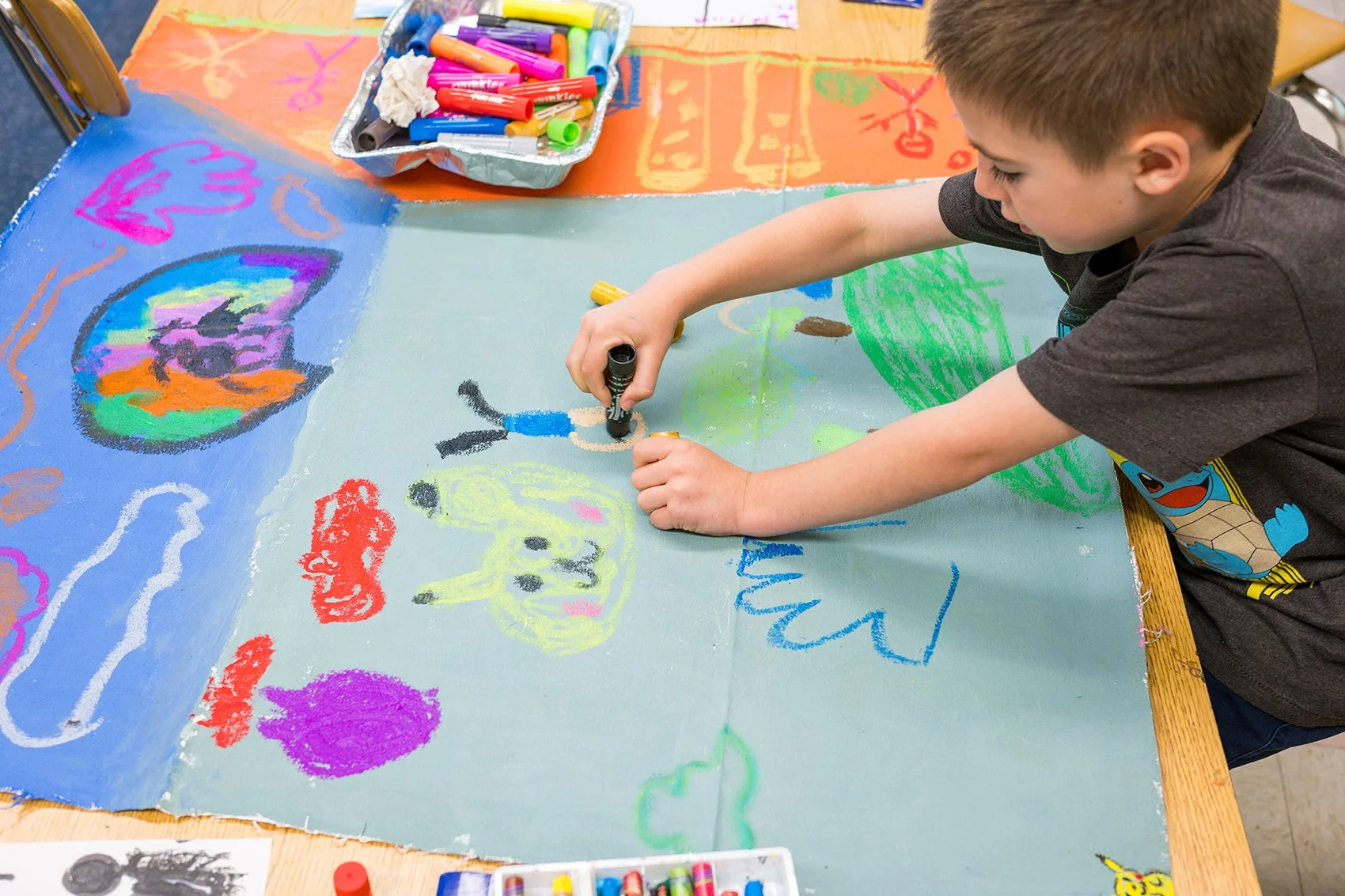
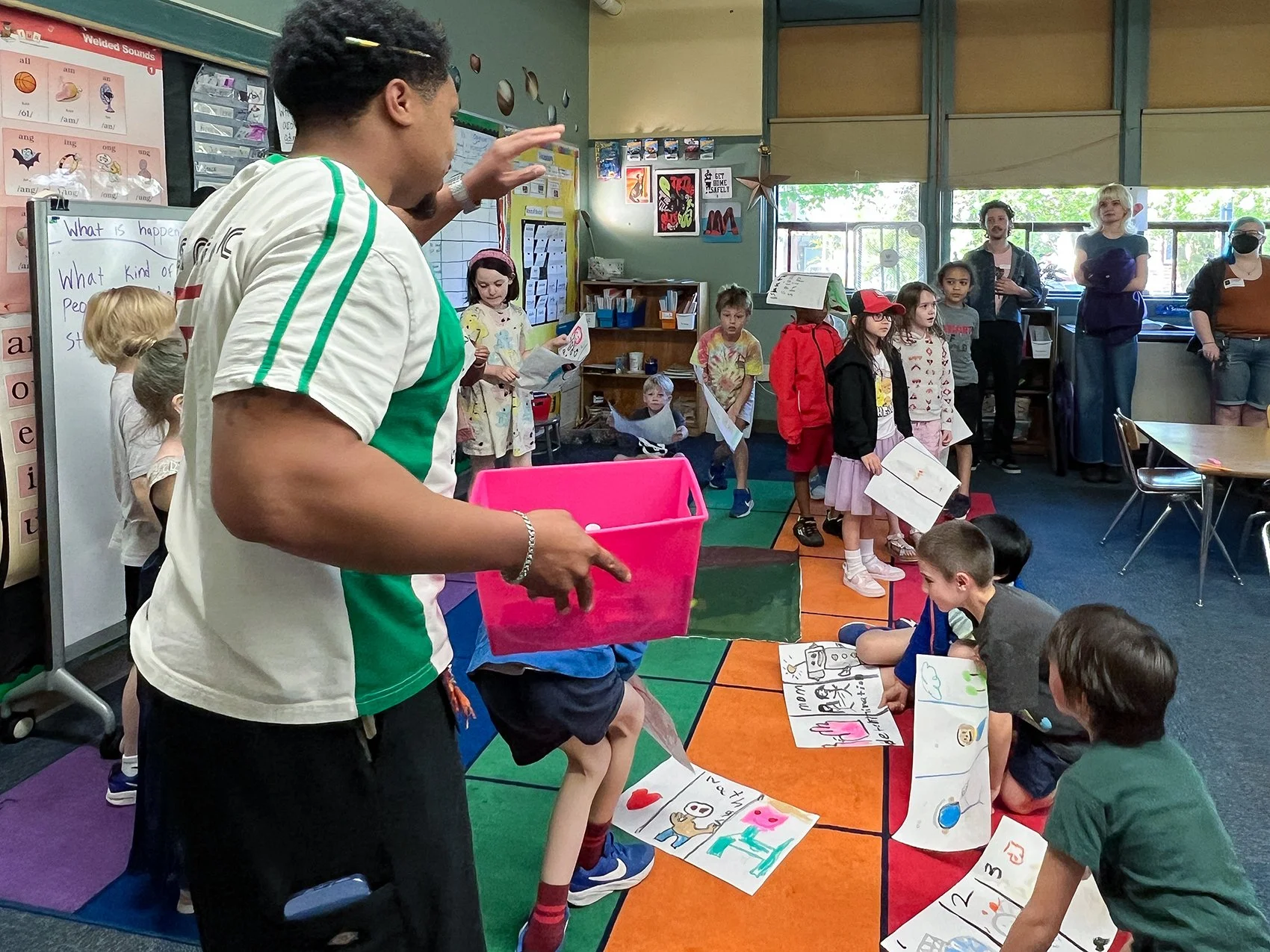
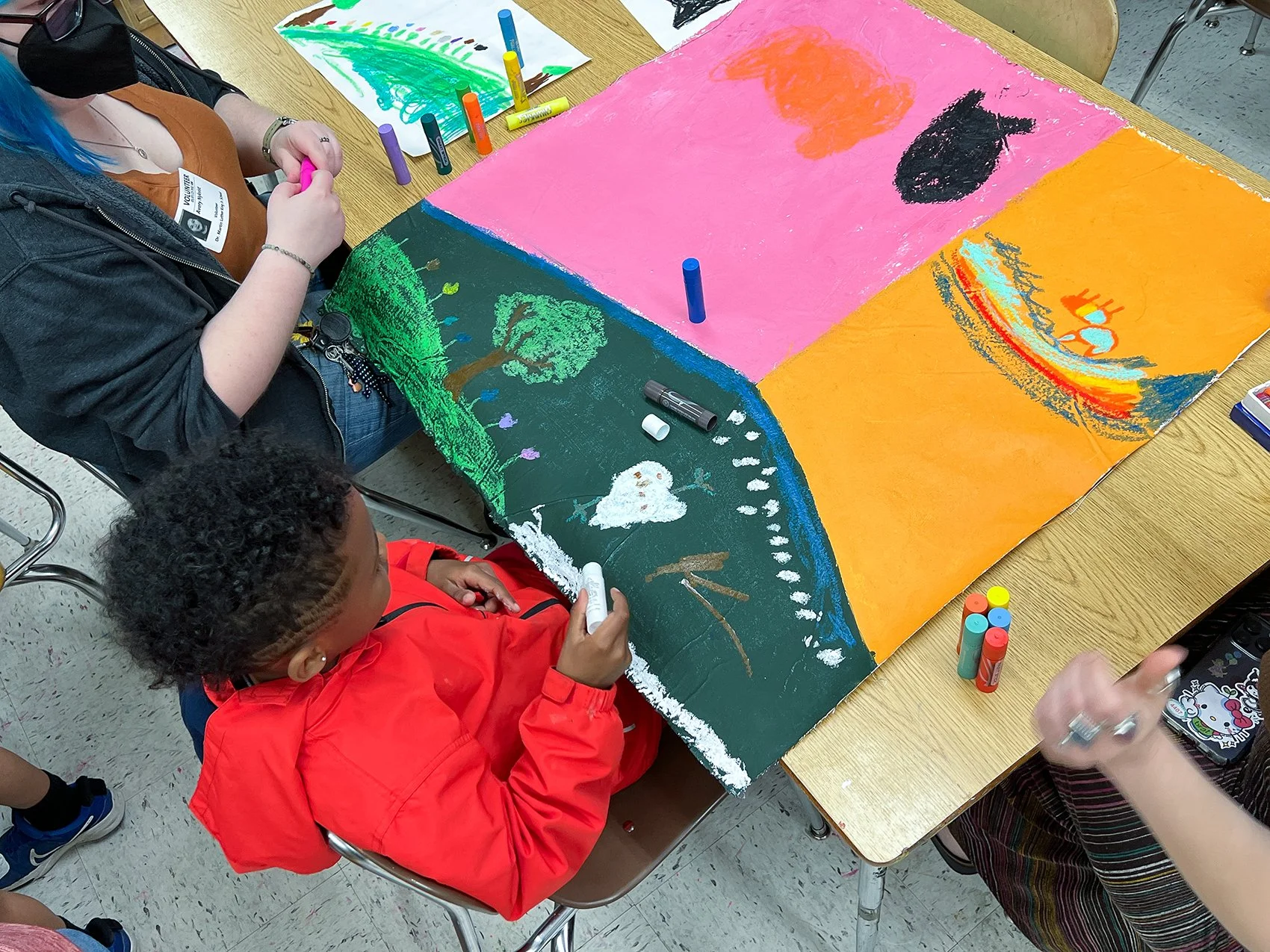
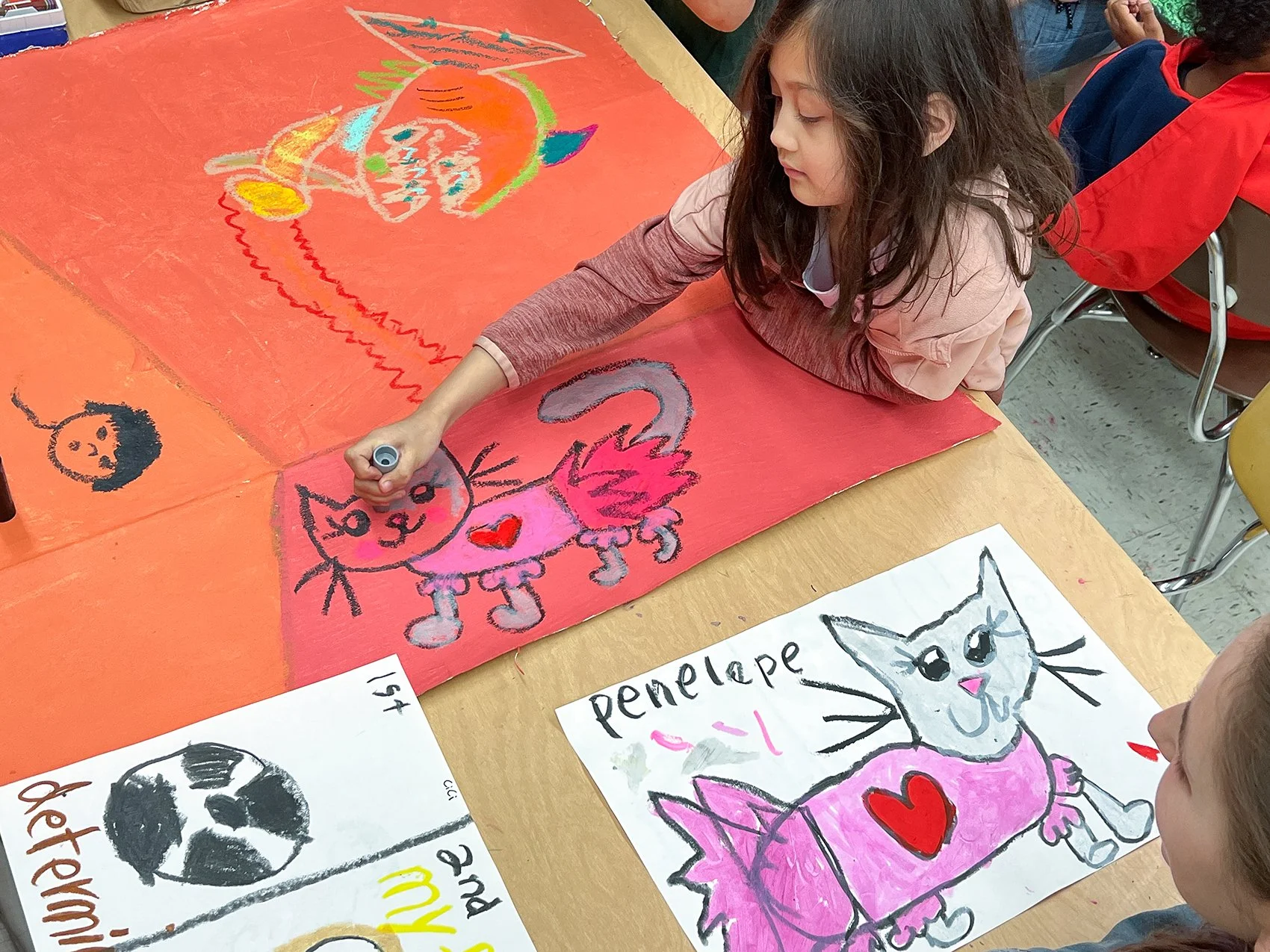
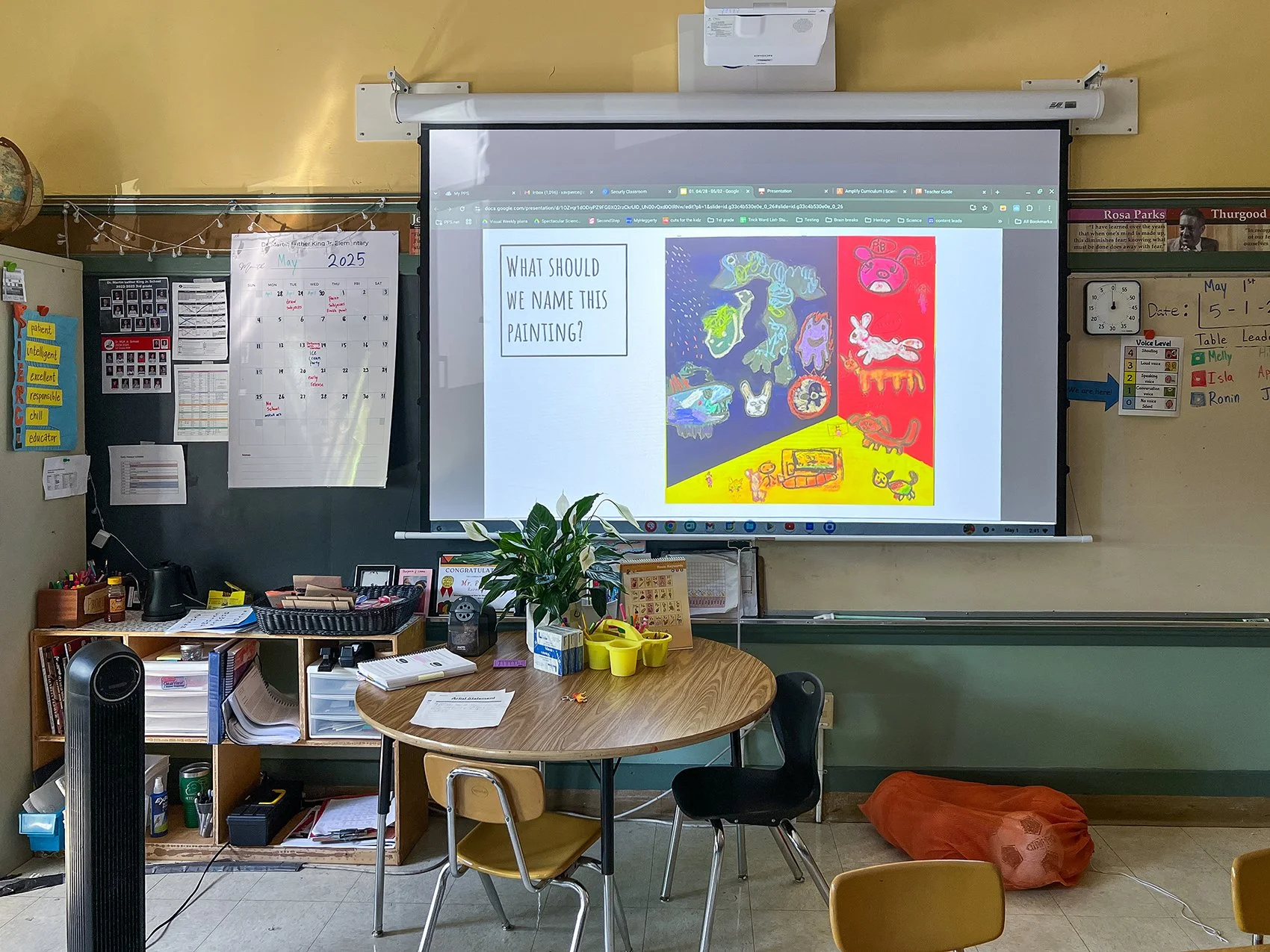
In his unique position as teacher and artist in the classroom, Mr. Pierce integrated his KSMoCA artist residency into the first grade curriculum, working primarily with the seventeen students in his morning class. First he began with a lesson on and a demonstration of the principles of the color wheel. Each student received a blank color wheel on which they labeled the location of the primary colors: red, yellow, and blue. (A color wheel is a visual representation of colors arranged in a circle, showing their relationships to one another.) A few days later, the students added the primary and secondary colors to their wheels, with help from their mentors from Portland State University.
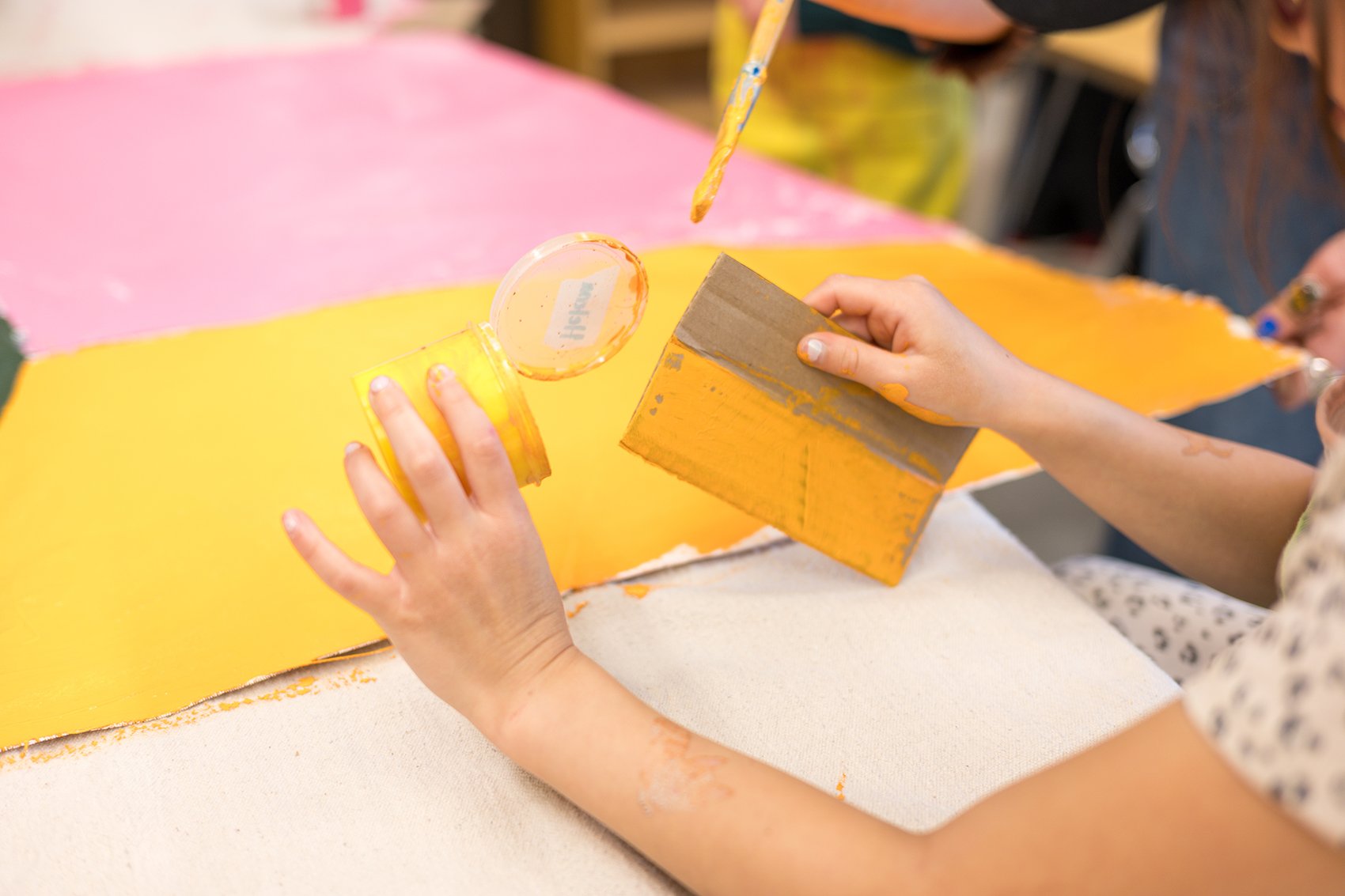
In a follow up workshop, the students created their own paint color that reflected an emotion or topic on their minds. The mentors helped the students write down their thoughts on worksheets that Mr. Pierce created, each of them naming their color, painting a sample of it, and then describing how it made them feel. Not only did this process connect them to thinking like an artist but also to the literacy curriculum. Each student poured their finished paint color into a small plastic container labeled with their first name. In a workshop the following week, they painted their personal color onto their section of raw canvas. Mentors assisted the students, some of whom used brushes while others used Mr. Pierce’s method of using common materials on hand; in this case, cardboard cut into rectangles for applying paint in wide strokes.
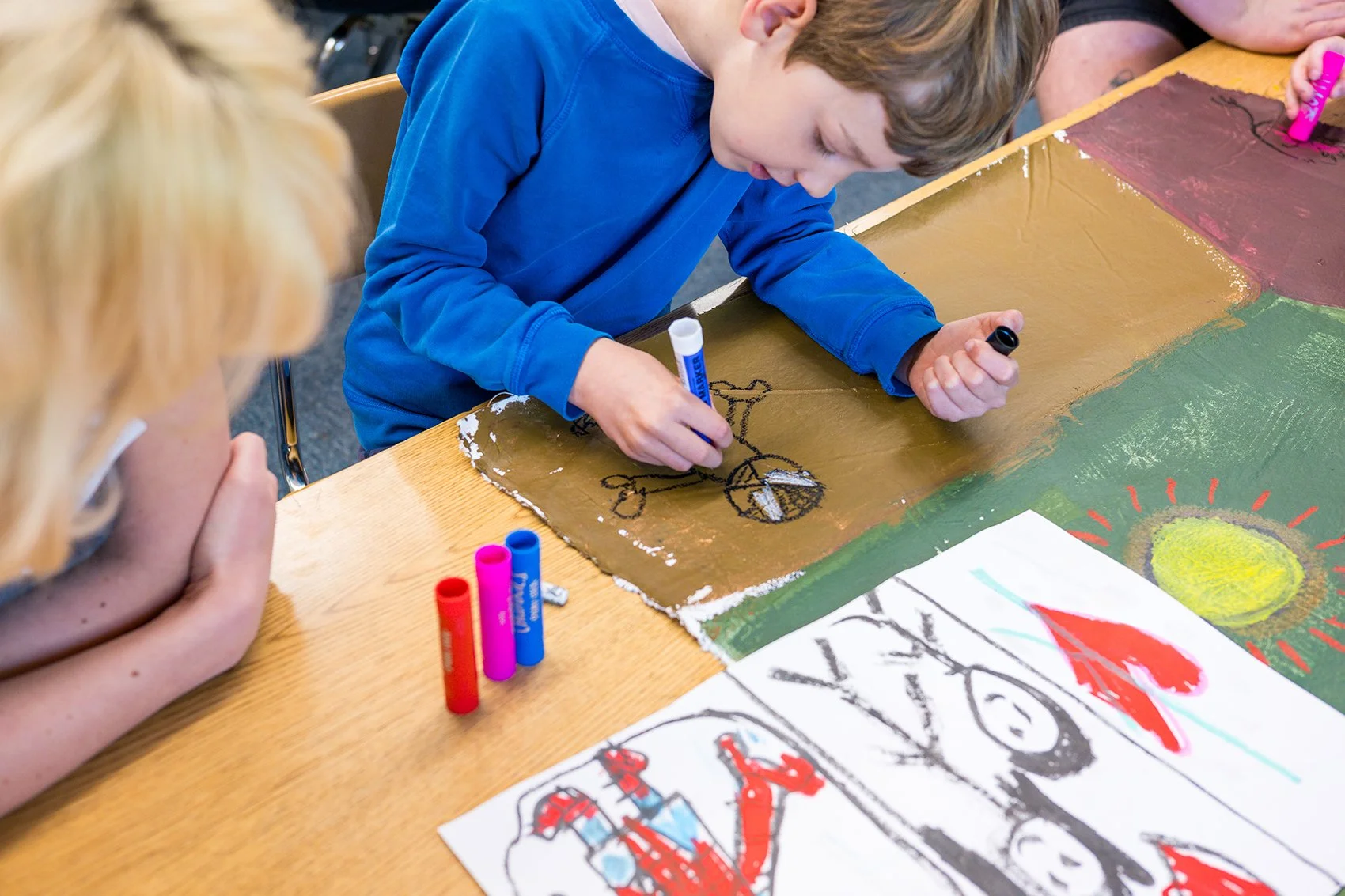
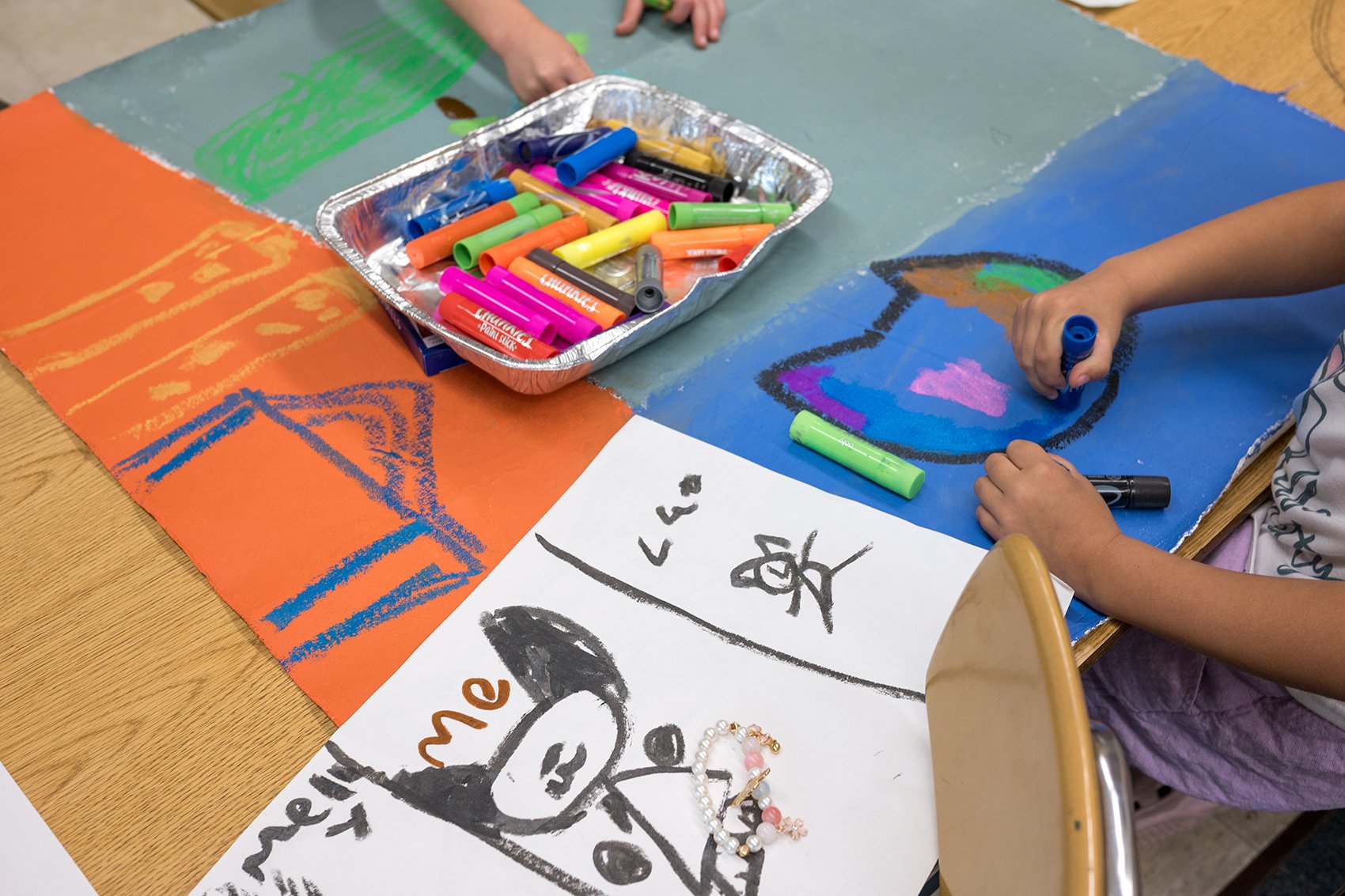
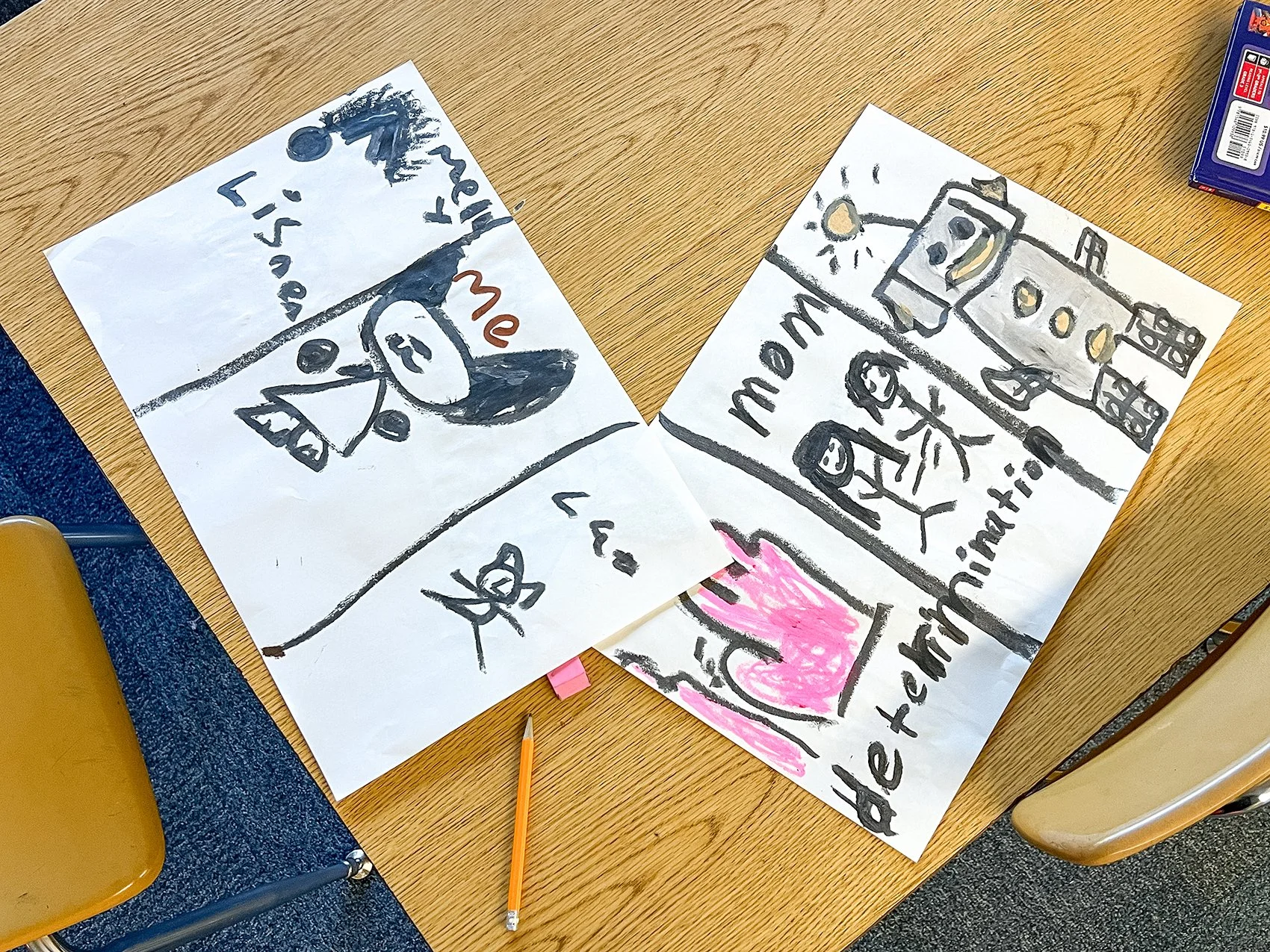
The following week, Mr. Pierce led a workshop on coming up with subject matter for the paintings. Students drafted their drawings using large sheets of paper divided into three vertical sections and then drew inside them using oil pastels. In the first panel, each student depicted a personal strength. The second panel was designated for an important person in their life and the third panel was for a treasured place or thing. A few days later, the students drew their images on the painted canvases with support from their mentors. During the final workshop with Mr. Pierce during class, they discussed what to name each of their paintings and wrote their artist statements for the exhibition wall labels.
Artist Talk with Xavier Pierce and Exhibition Opening
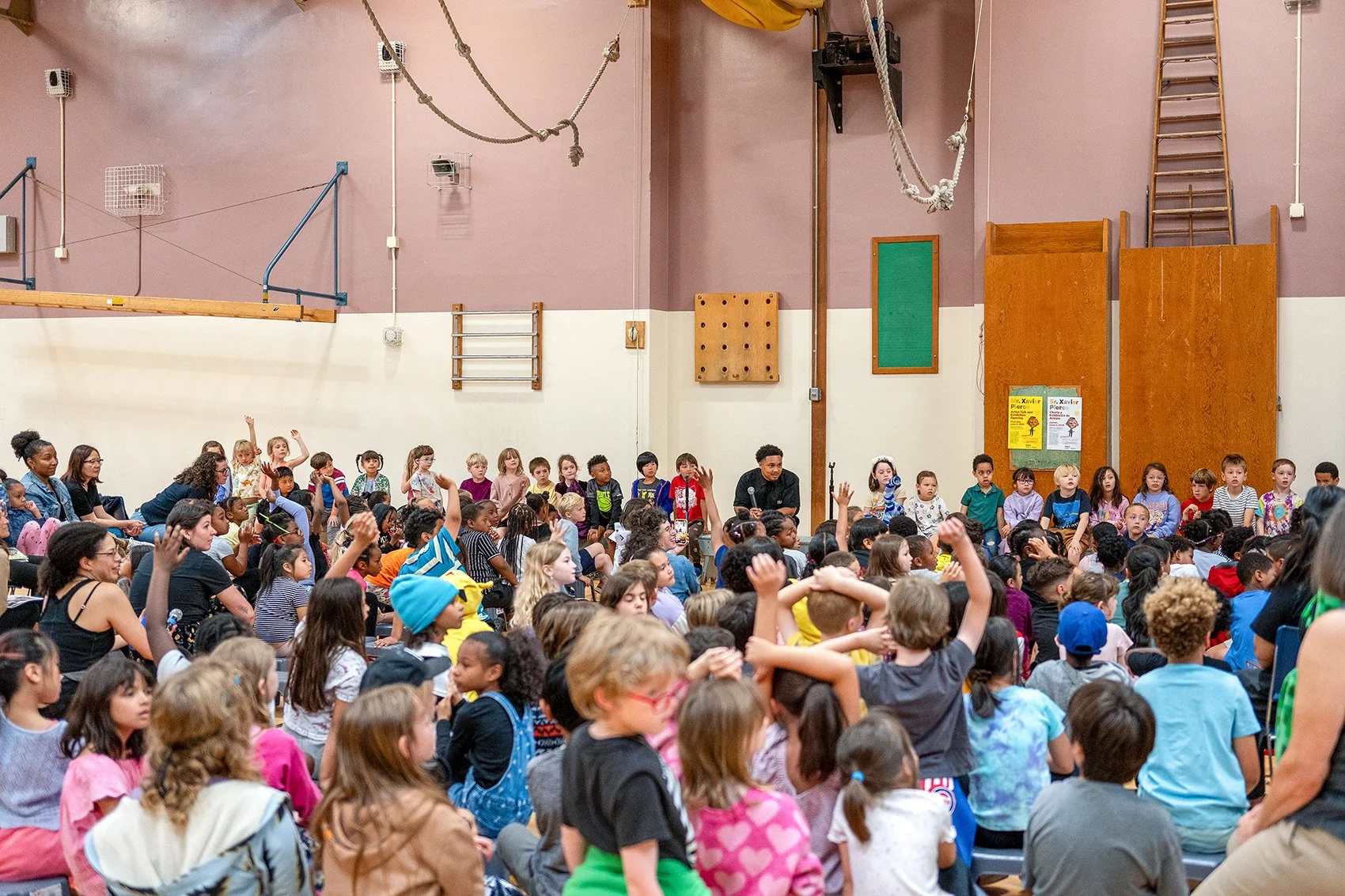
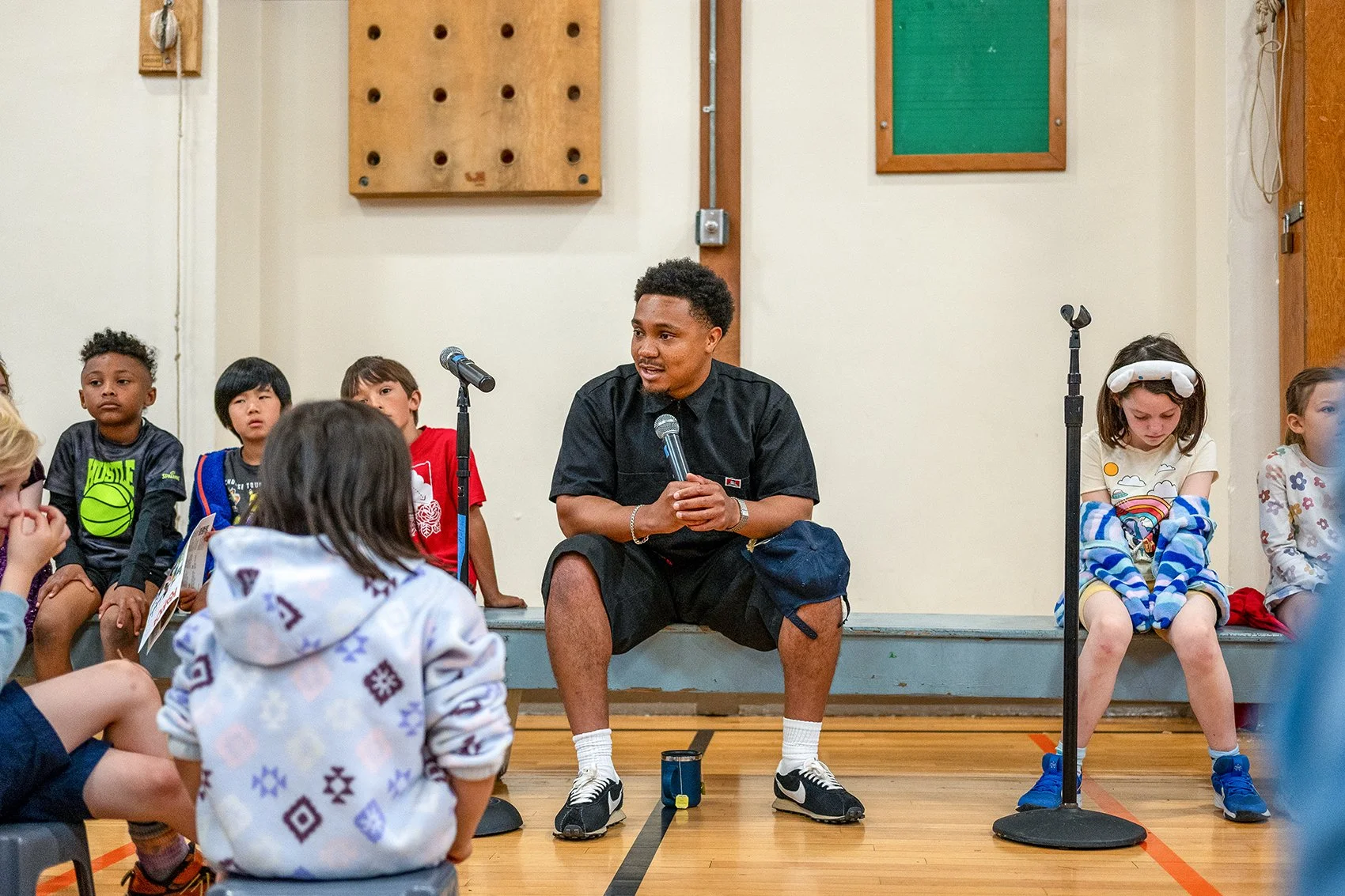
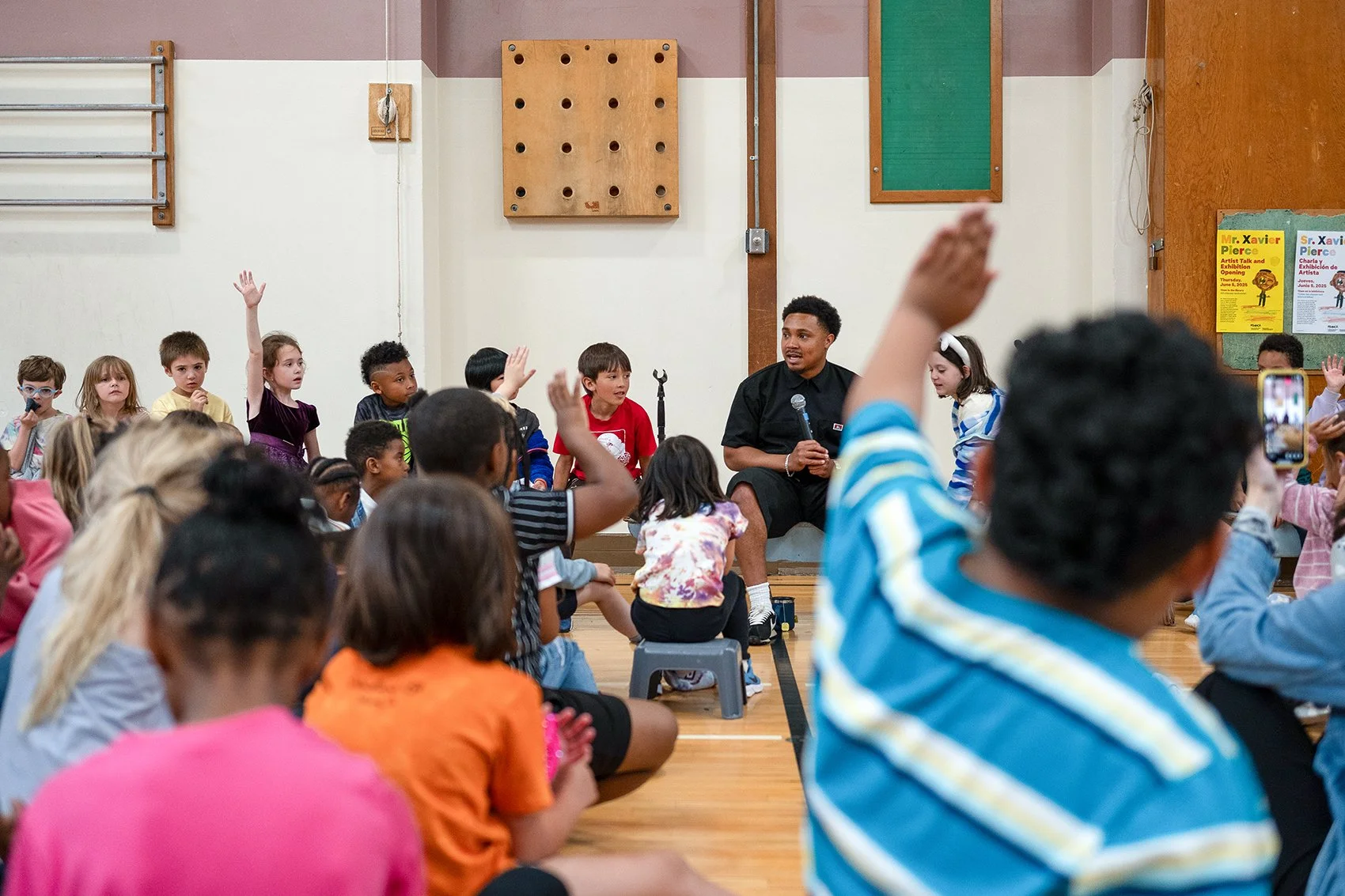
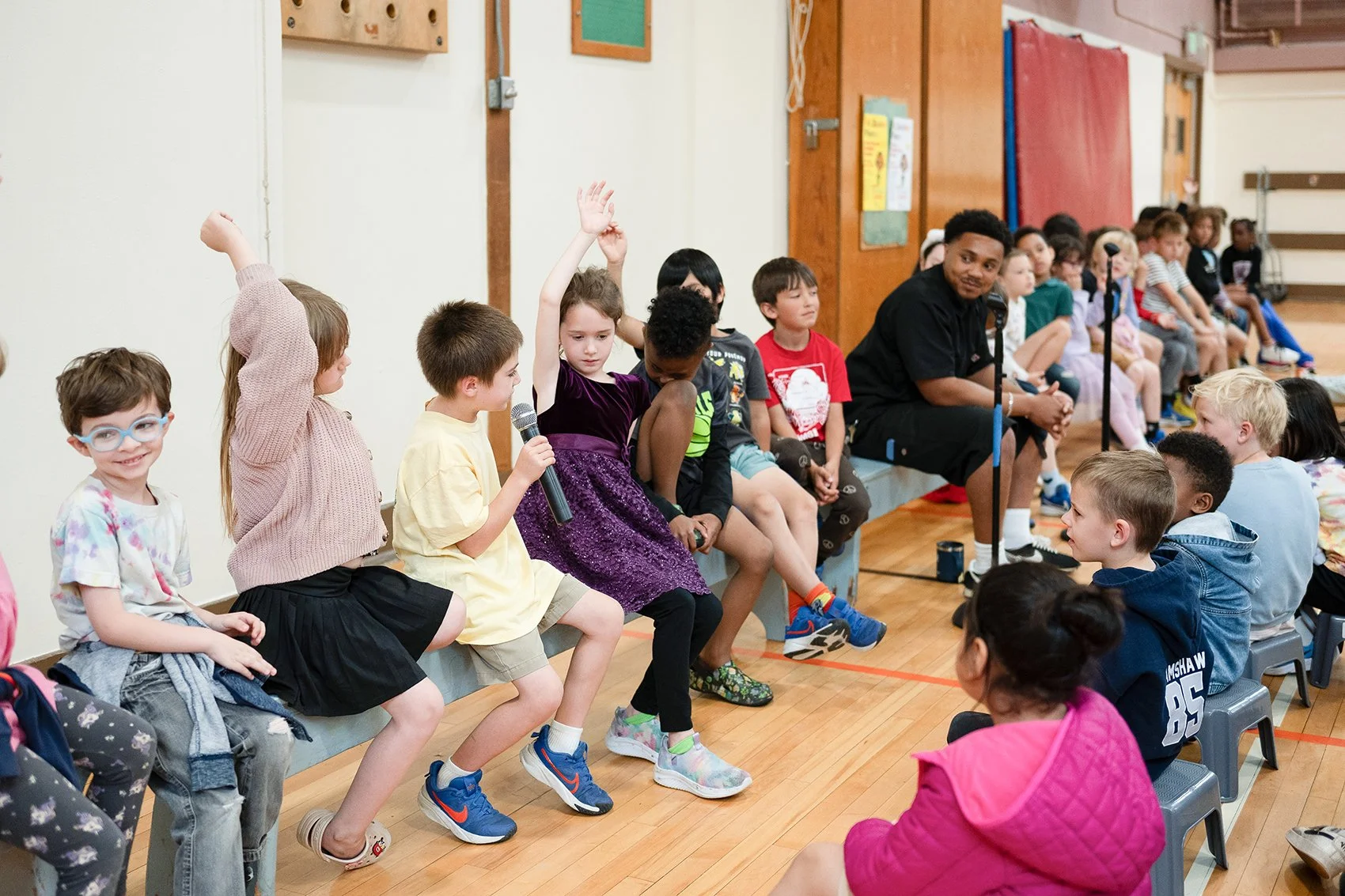
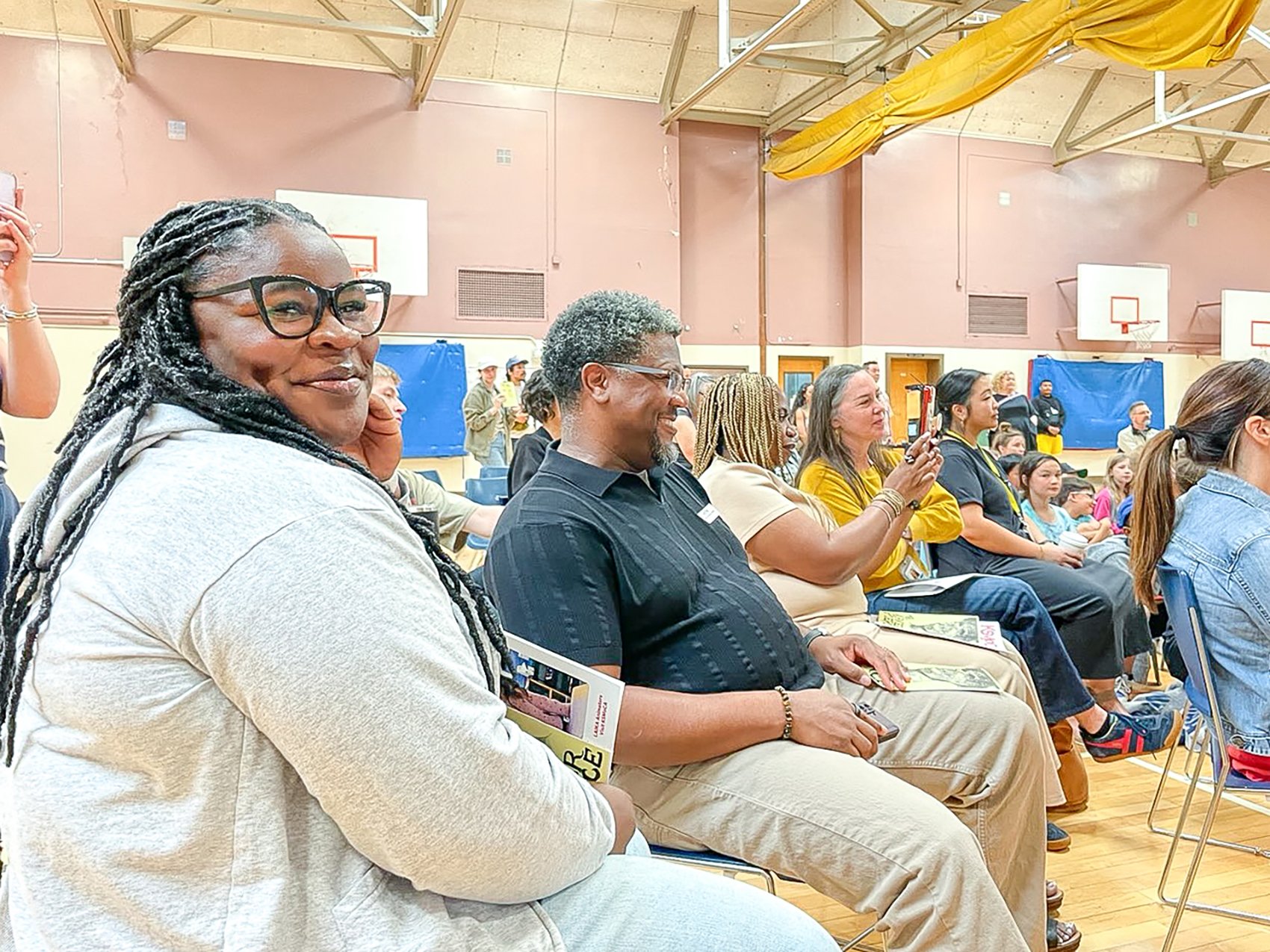
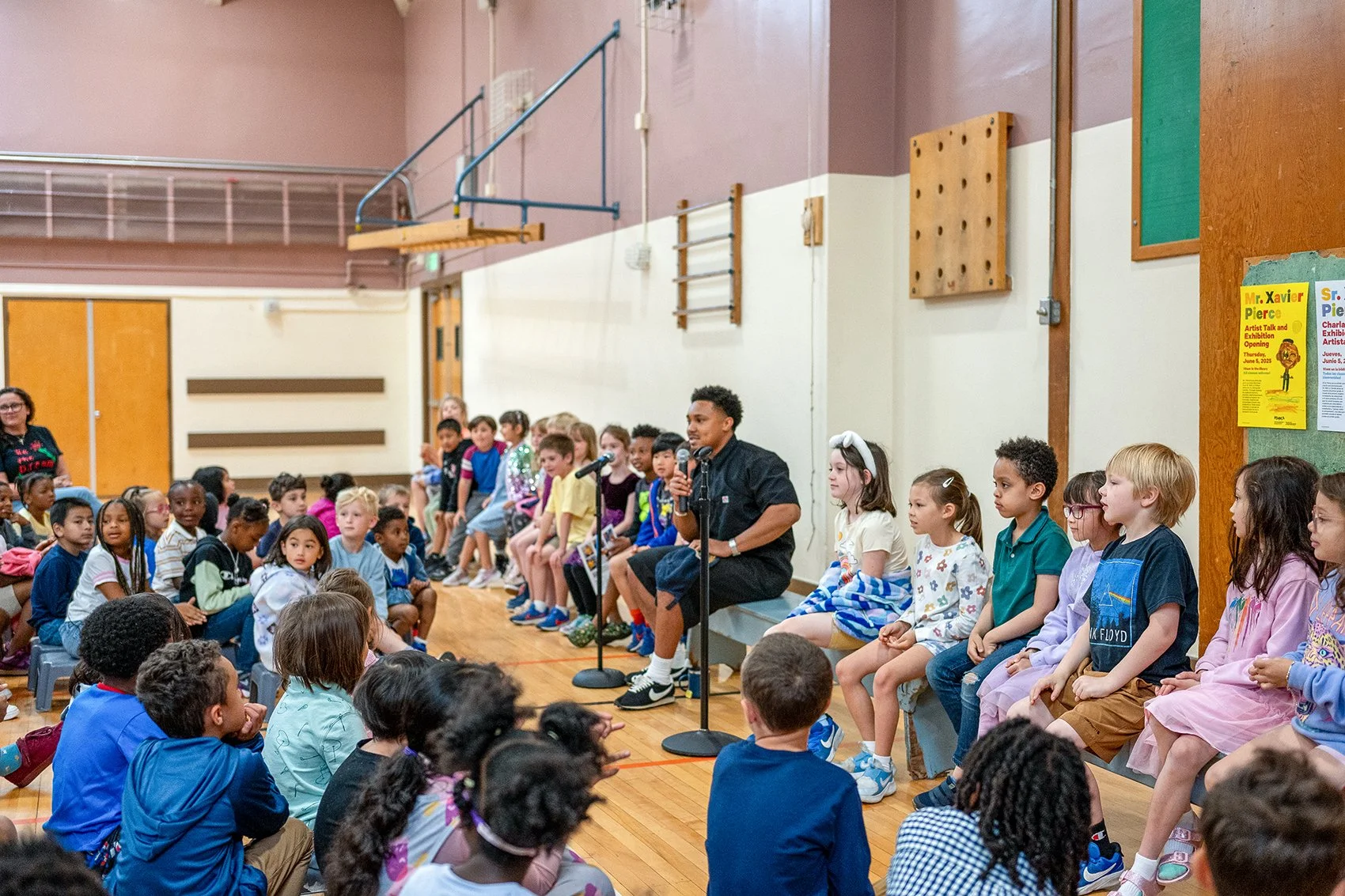
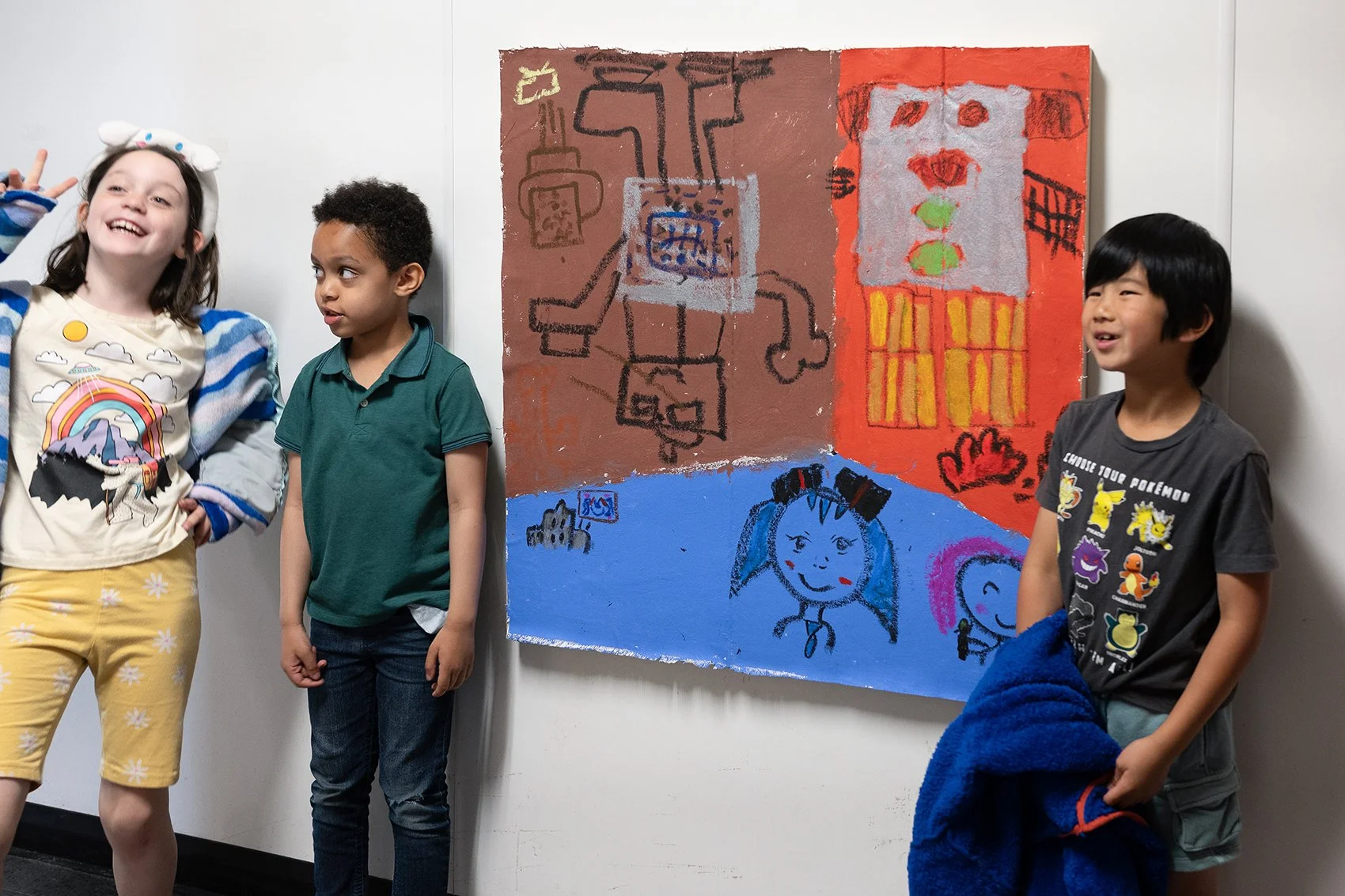
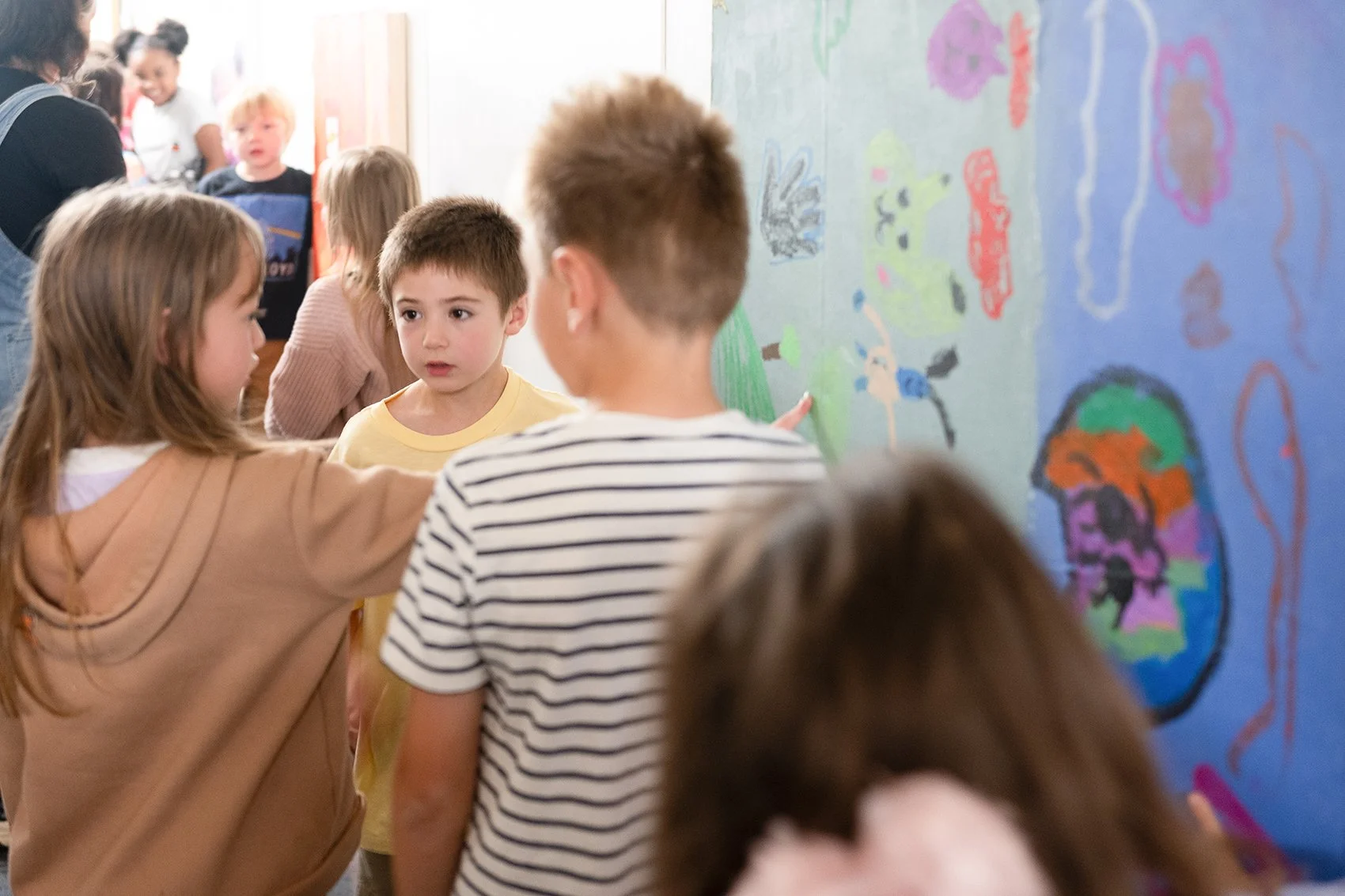
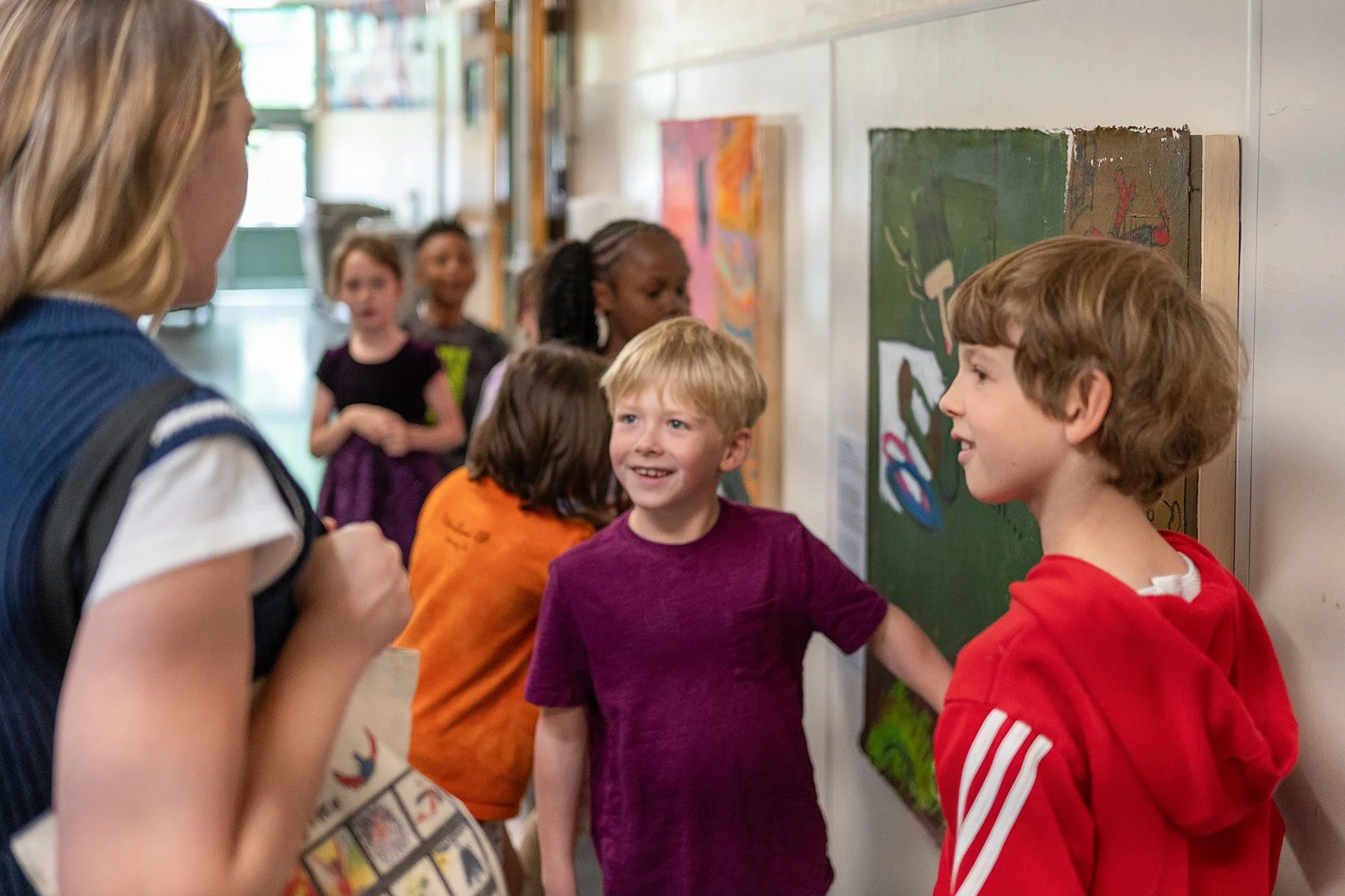
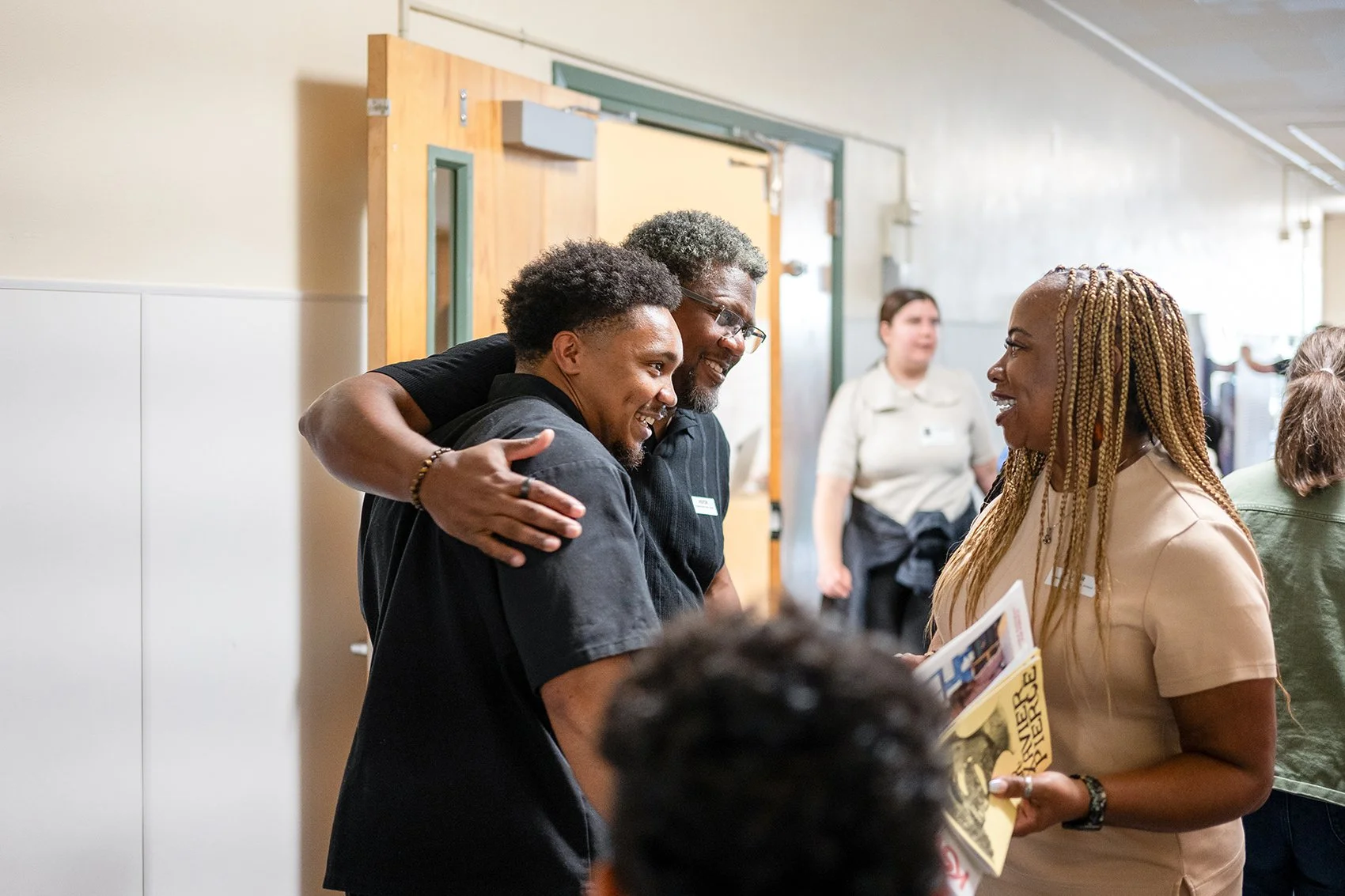
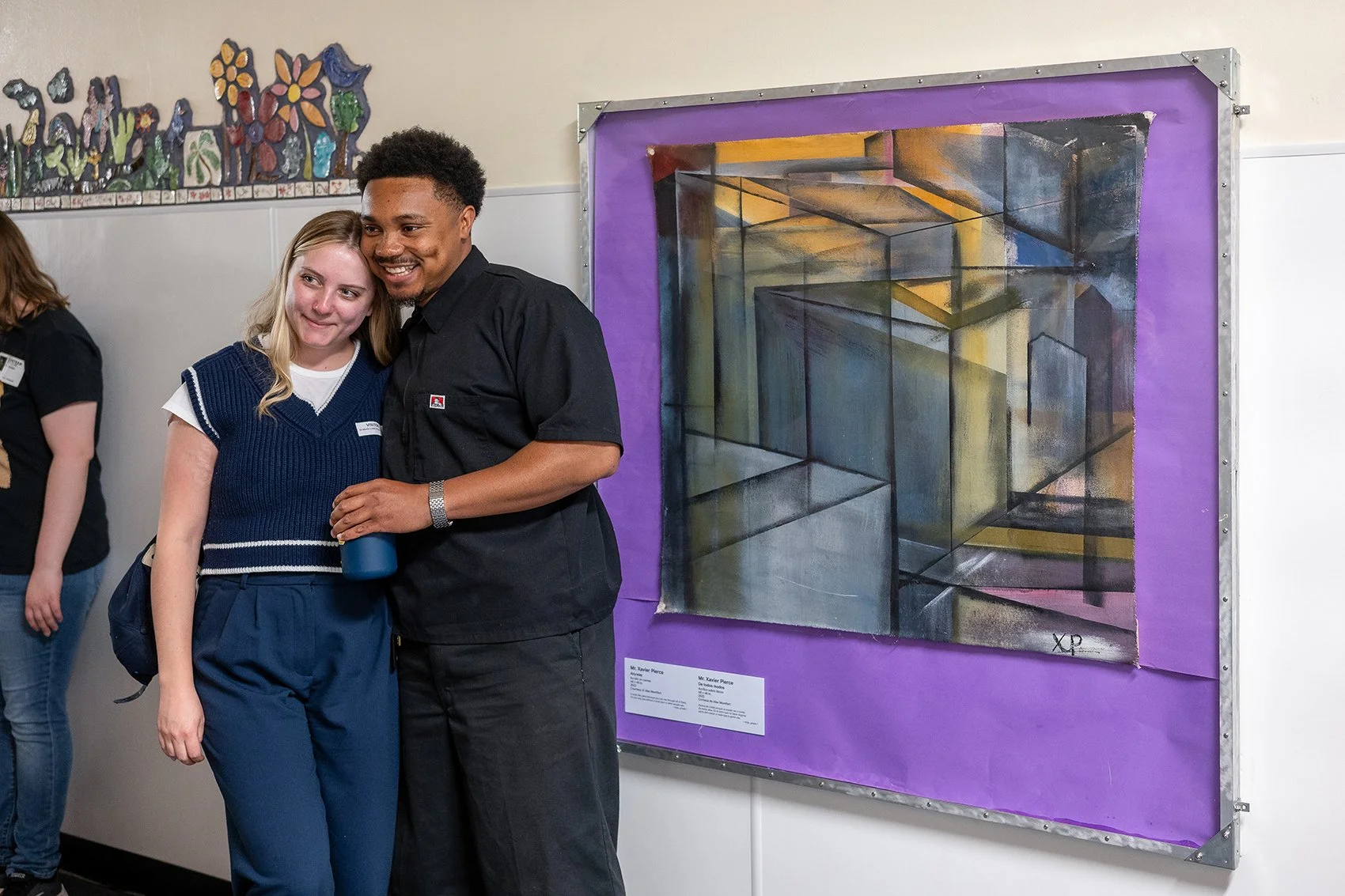
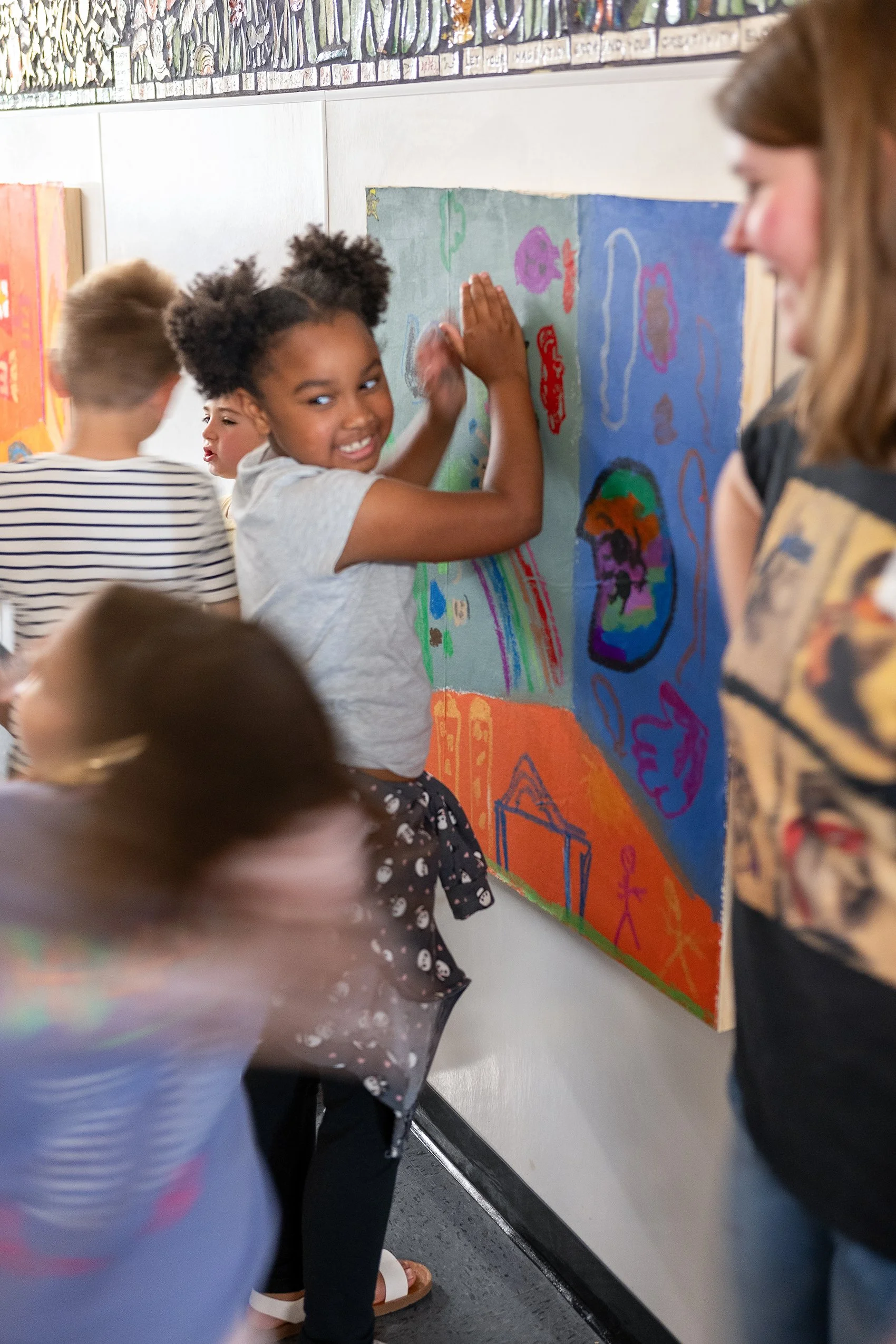
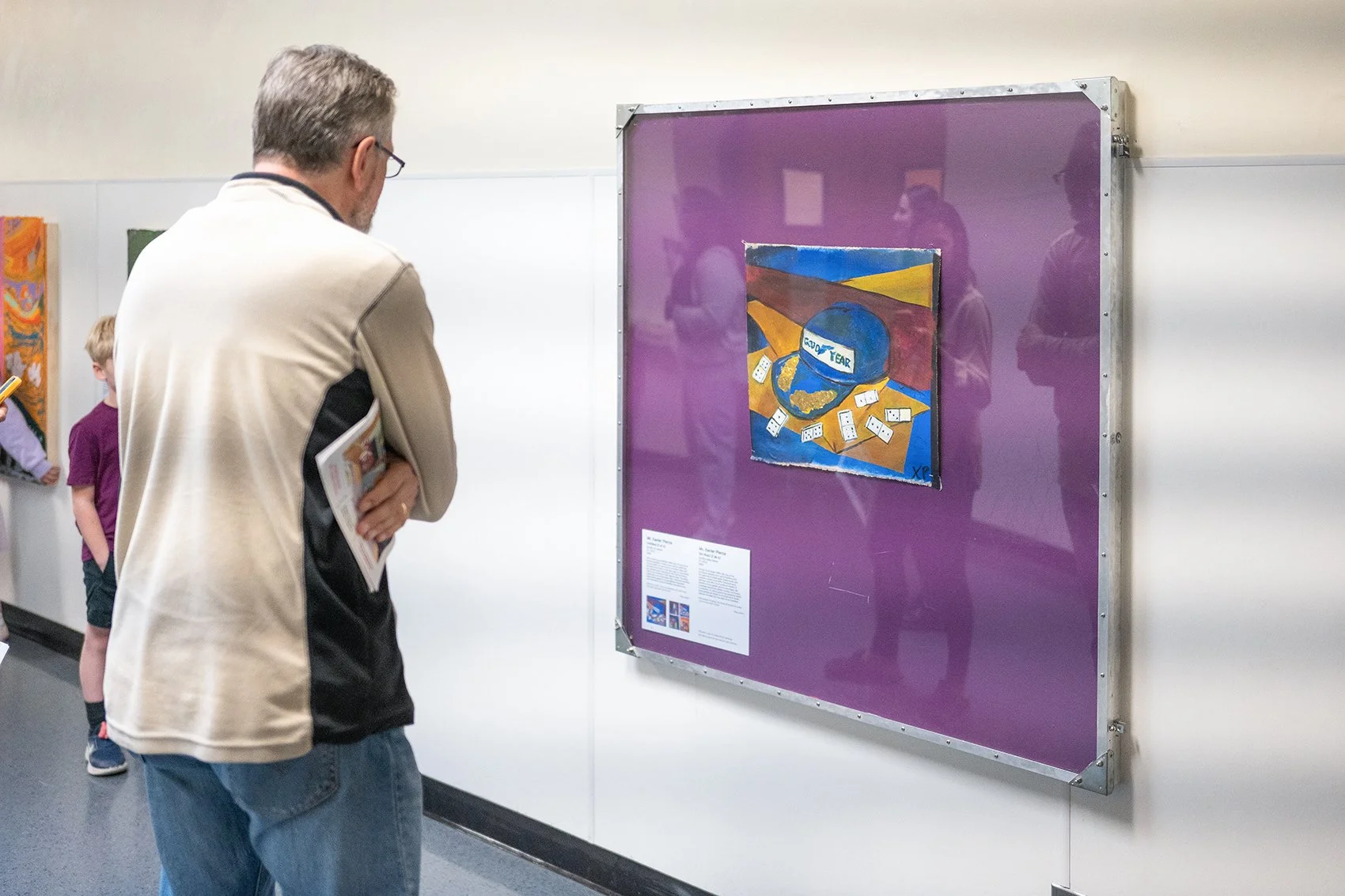
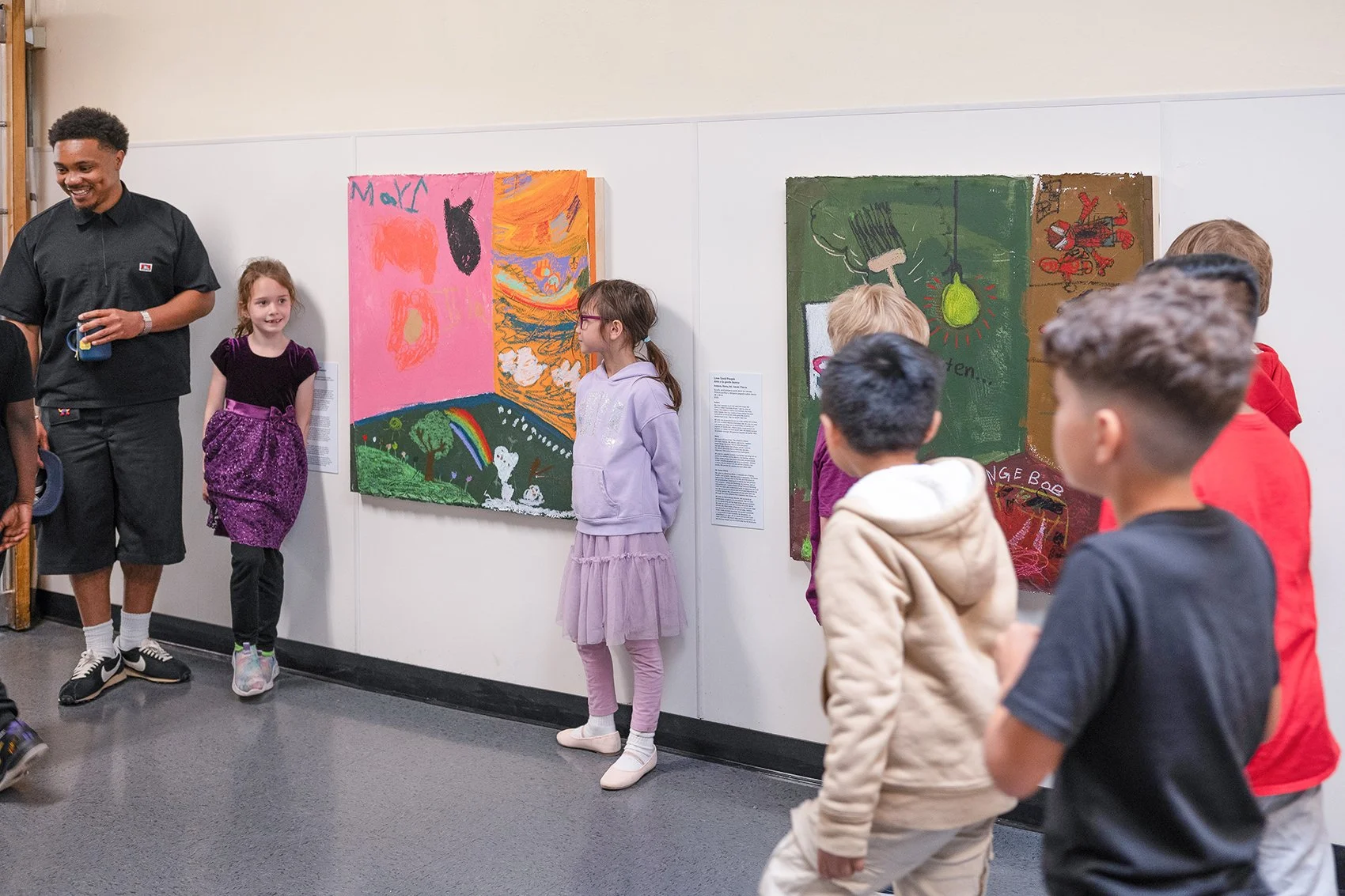
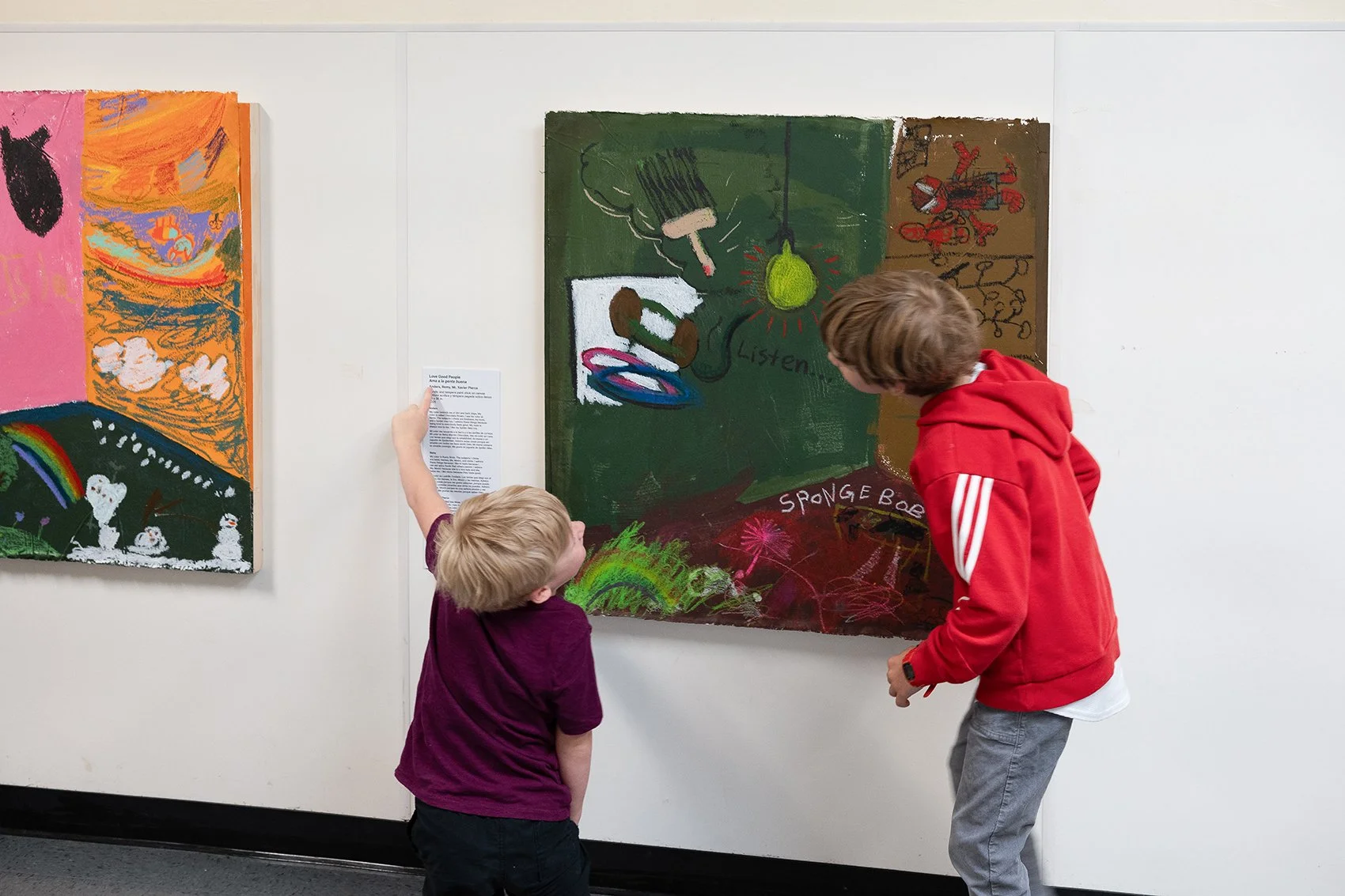
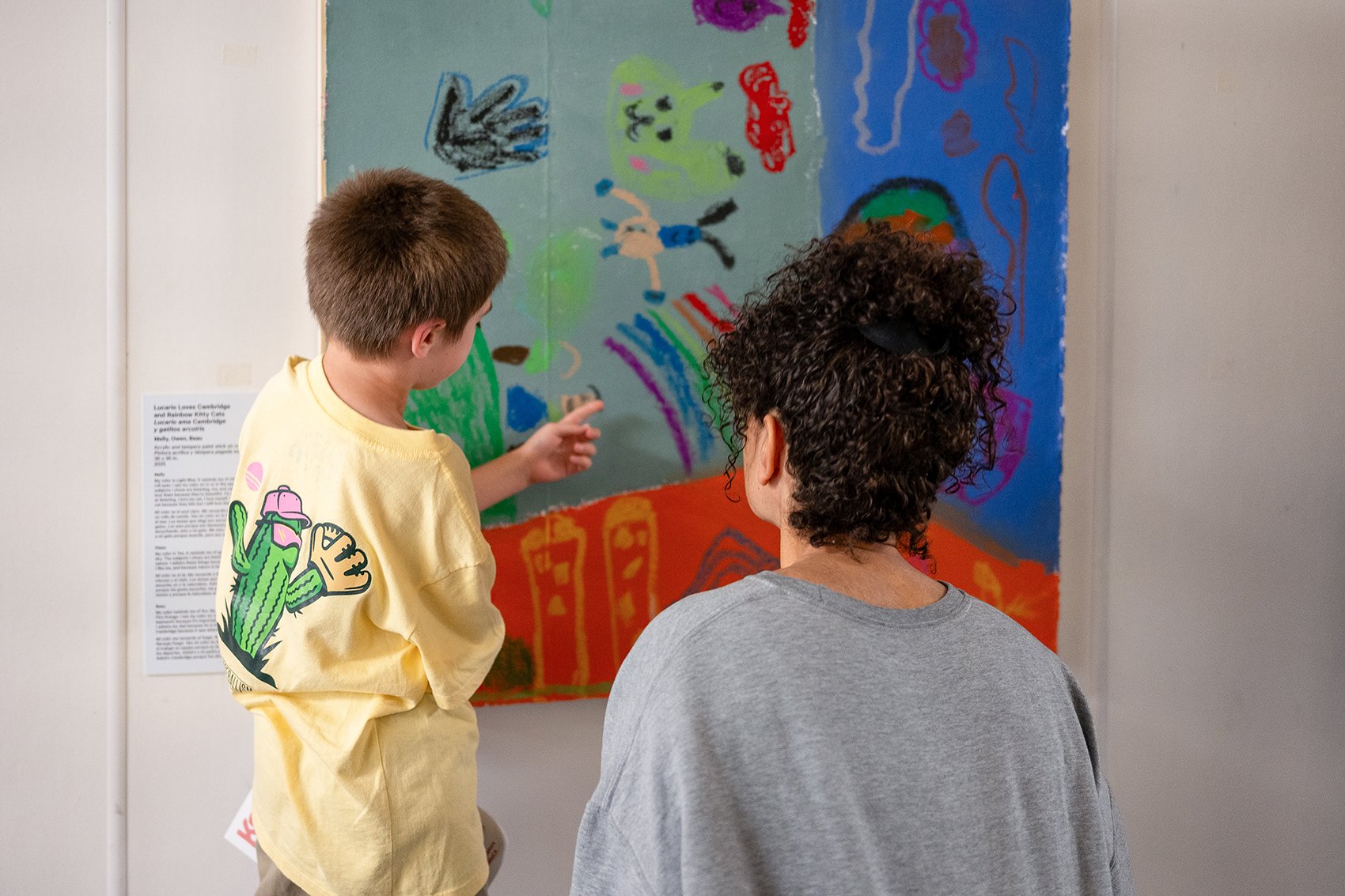
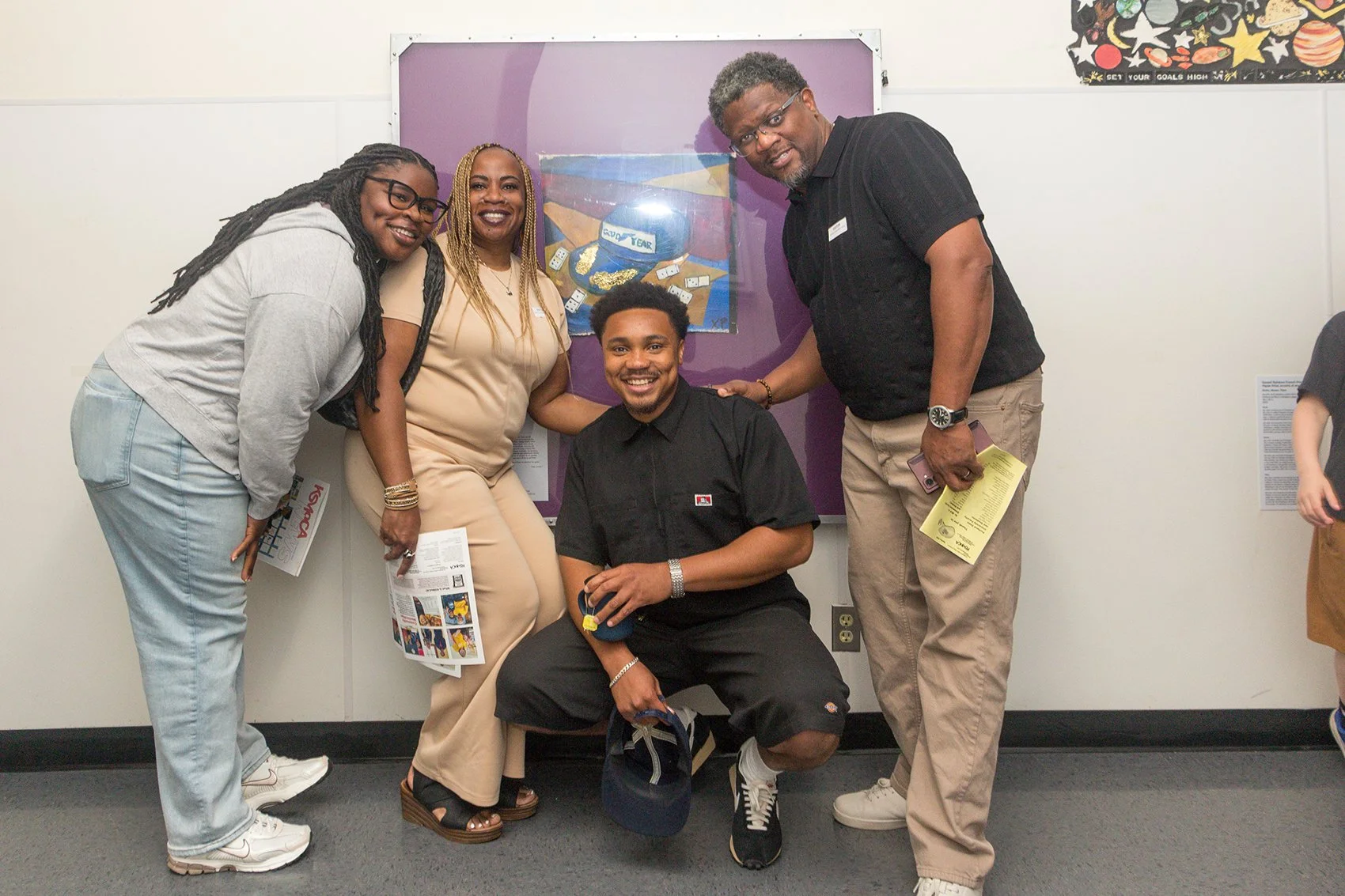
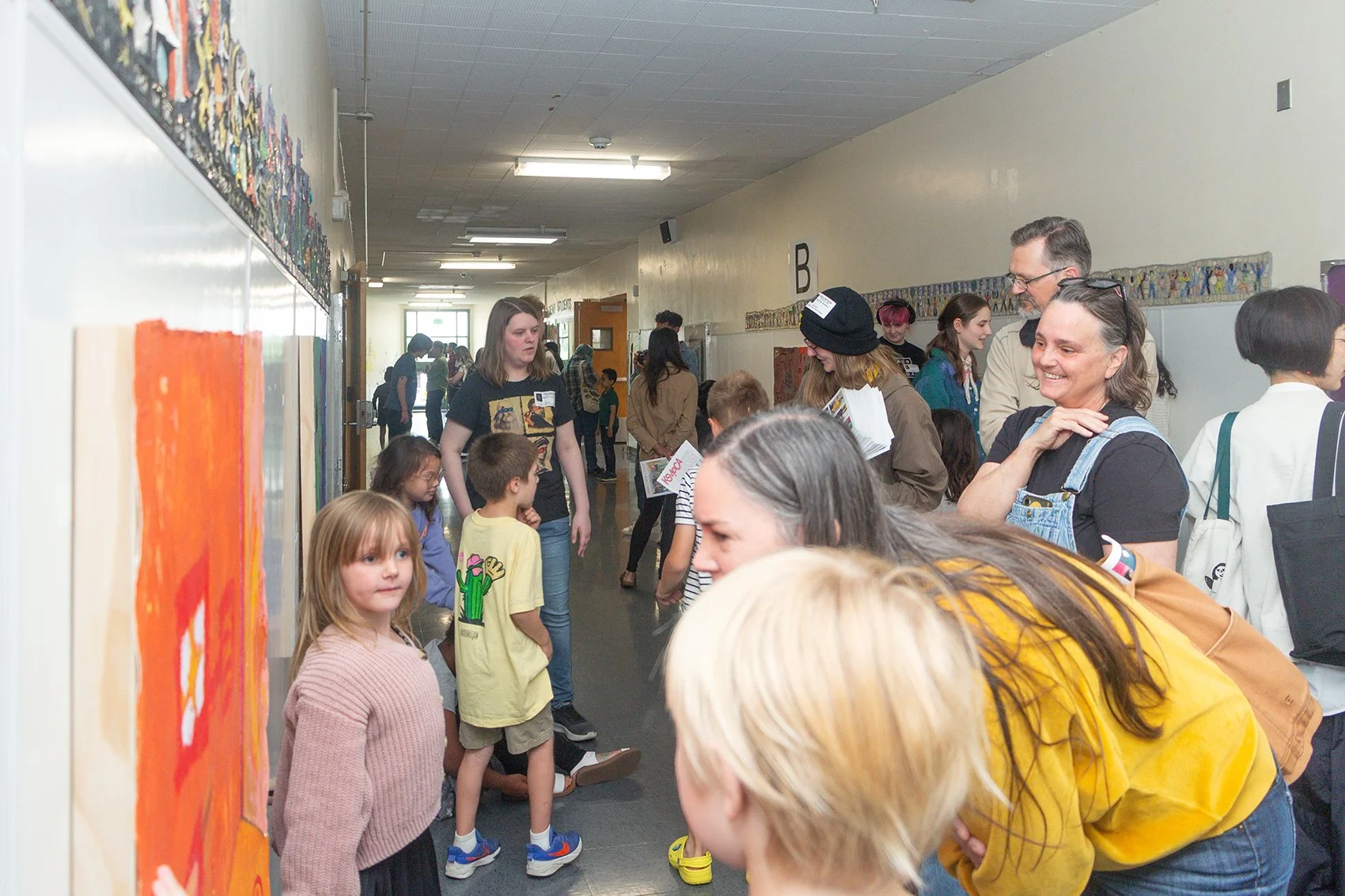
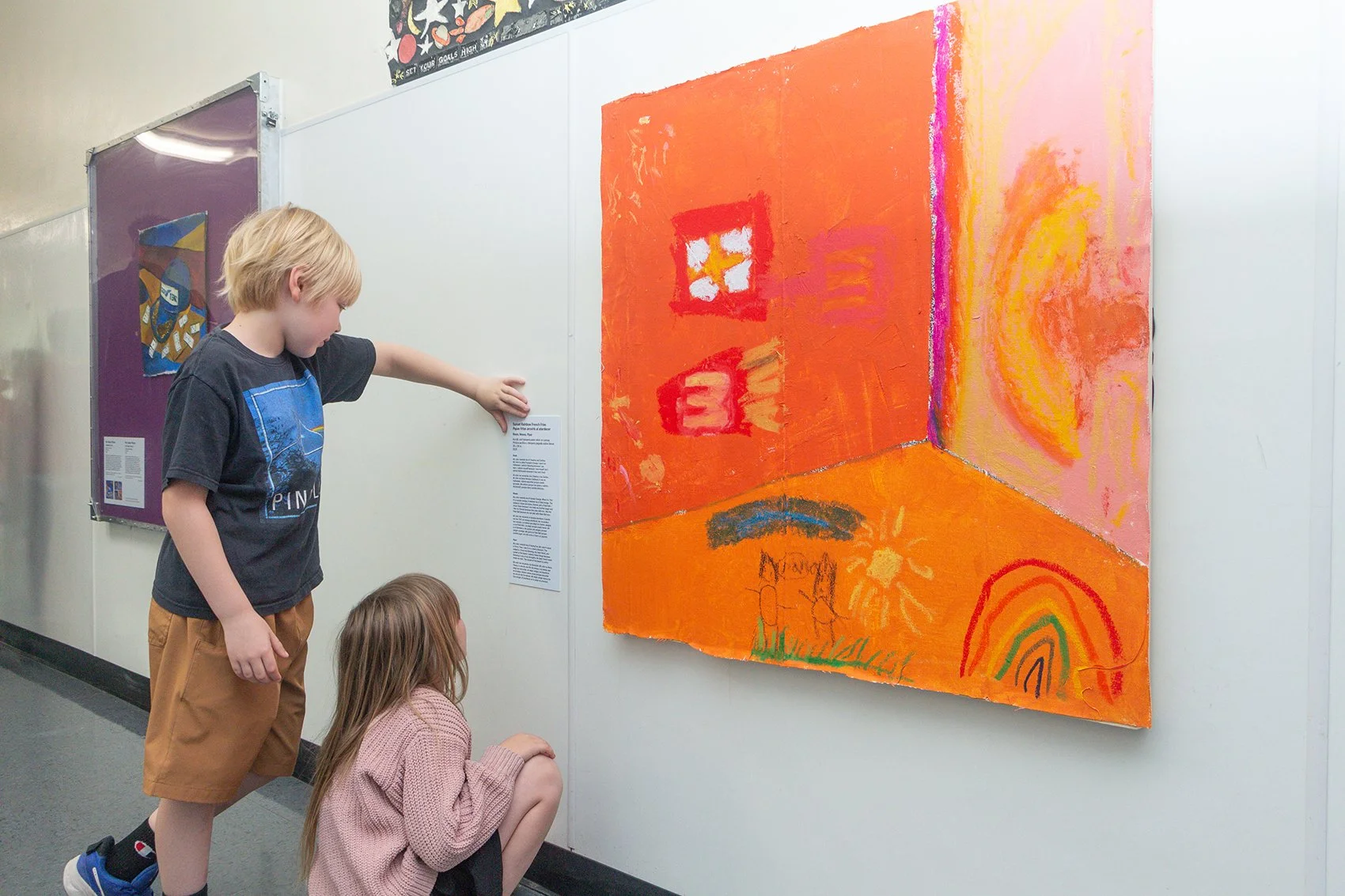
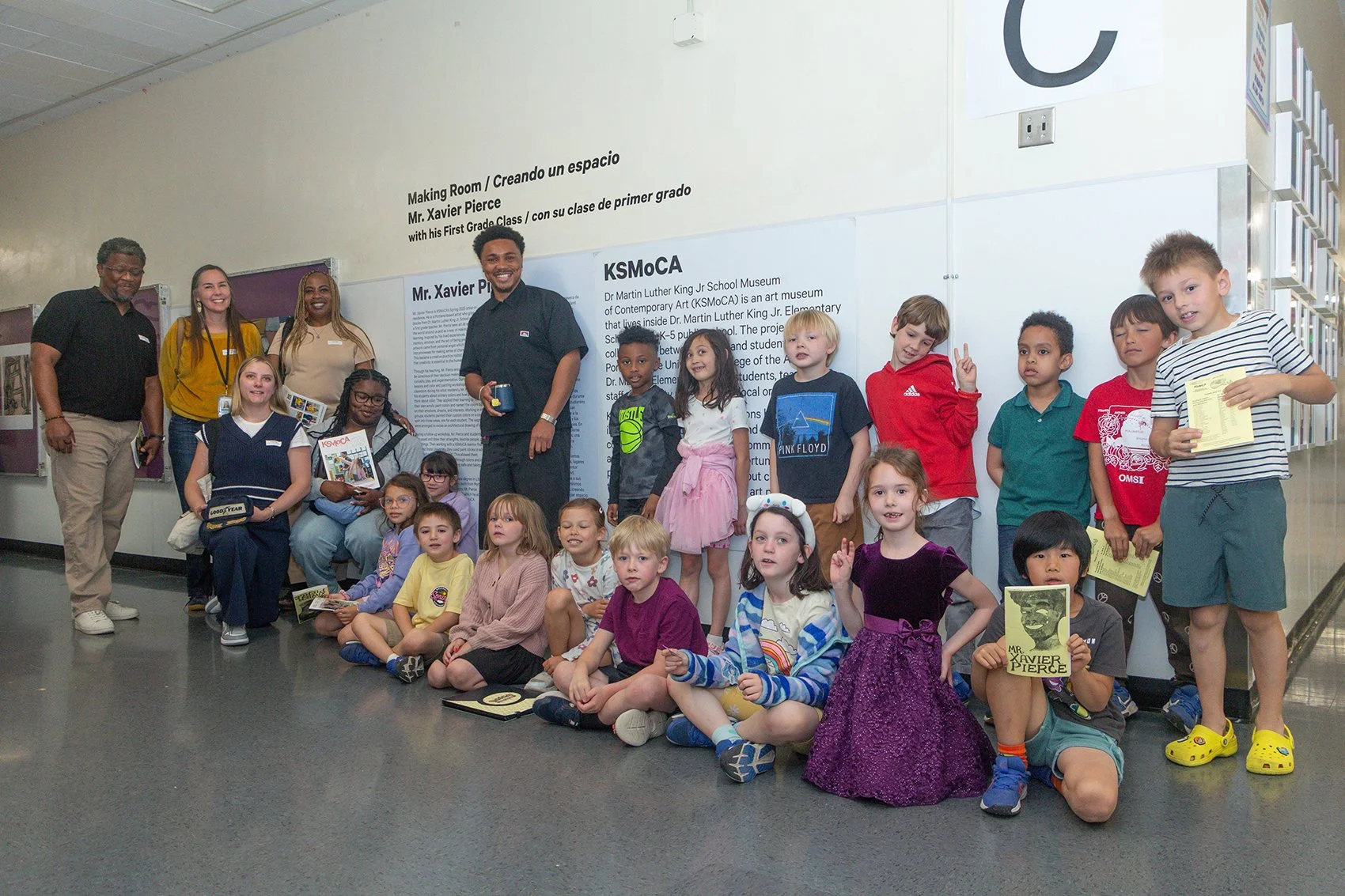
Over 300 students from different grades gathered in the school gymnasium for Pierce’s artist talk. His first grade students joined him on stage and together they answered questions from the audience. Every attendee received a copy of a small magazine about Pierce that was created by Portland State University students. After the talk, Pierce and his students gave visitors tours of the exhibit. Families, classmates, school staff, and members of the public were all invited to attend and celebrate.
Installation documentation